29 December 2015

Iran close to fulfilling pact


George Jahn has a Time article from The Associated Press about Iran:
A landmark nuclear deal with Tehran moved closer to implementation, with Secretary of State John Kerry announcing that tons of enriched uranium that could potentially be turned to use in atomic arms were on a ship heading from Iran to Russia. Kerry hailed the development as “one of the most significant steps Iran has taken toward fulfilling its commitments” under the 14 July 2015 nuclear agreement, in comments that expanded on information The Associated Press received from a senior Russian diplomat earlier.
That envoy, who spoke on condition of anonymity because he wasn’t authorized to be cited by name, said Iran had permitted Russia to take possession of and ship out most of its low-enriched uranium. Low-enriched uranium is suitable primarily to generate nuclear power and needs substantial further enrichment for use in the core of a nuclear warhead.
But Kerry said that the shipment also included the remaining stock of Iranian uranium that already had been enriched to higher levels, just a technical step away from what is needed to form the fissile core of a nuclear bomb.
The 14 July deal aims to reduce Iran’s ability to make nuclear weapons, something Tehran says it has no interest in.
Under the agreement, Iran committed to shipping out all except three hundred kilograms of its low-enriched uranium and to either export the uranium it has that is enriched to near twenty percent, process it into low-enriched uranium, or turn it into fuel plates to power a research reactor.
Kerry indicated both steps were completed on Monday, announcing that more than twelve tons of enriched “uranium materials” were in the hold of a Russian ship steaming toward Russia. He said the shipment included the near-twenty-percent enriched uranium that had not yet been turned into fuel plates.
The nuclear deal aims at increasing the time Tehran would need to make a nuclear weapon from present estimates of a few months to at least a year. Kerry said the export of enriched uranium means a significant move toward that goal by more than tripling “our previous two-three month breakout timeline”.
The July agreement also commits Iran to sharply reduce the number of its centrifuges, used to enrich uranium, as well as to re-engineer a reactor to cut its output of plutonium, another pathway to nuclear weapons. The UN’s International Atomic Energy Agency, which is monitoring the progress of the Iranian implementation, says both of those measures are well underway.
The Russia-Iran accord under the July deal foresees that Moscow ships Iran over a hundred tons of raw uranium in exchange for Tehran’s low-enriched uranium, and Ali Akbar Salehi, who heads Iran’s atomic energy organization, recently said that his country already received the uranium ore.
In return for Tehran’s acceptance of more than a decade of constraints on programs that could be used to make nuclear arms, most international sanctions imposed over its nuclear programs will be lifted. Iran will have access to about a hundred billion dollars of previously frozen assets and fully return to the oil market.
That will happen after the IAEA confirms that Iran has met all commitments. That stage of the Iran-six power deal, known as 'implementation day', is expected sometime next month.
Rico says he better hurry up and finish his novelArmageddon, before peace breaks out...

'Affluenza' teen detained in Mexico


CNN has an article by Evan Perez about yet another idiot criminal:
Mexican authorities have detained so-called "affluenza" teen Ethan Couch (photo) and his mother near the popular Mexican beach resort town of Puerto Vallarta, officials briefed on the matter told CNN.
Couch, now eighteen, went missing earlier this month, two years after he made national news when he was sentenced to probation for a drunken driving crash that killed four people. Couch is expected to be turned over to the US Marshals Service, who have spent weeks searching for him. A spokesman for the service declined to comment.
He is wanted by authorities in Tarrant County in Texas, for allegedly violating probation. His mother was listed by Texas authorities as a missing person after their disappearance, and the authorities said they believe she was assisting her son.
A warrant had been issued for the teen to be taken into custody after his probation officer couldn't reach him earlier this month. His apparent disappearance came after a video allegedly showed him at a party where alcohol was being consumed, authorities said.
Word of the search for Couch has reignited controversy over the case, which drew widespread attention after a psychologist testified that Couch, who was sixteen at the time, suffered from "affluenza", describing him as a rich kid whose parents didn't set limits for him.
Prosecutors had requested that Couch be sentenced to twenty years behind bars. The judge's decision to give him probation instead of jail time was controversial at the time, and more so after the recent video appeared to show the teen playing a drinking game at a party.
District Attorney Sharen Wilson has said it "certainly looks like him" in the video, but added that, without further investigation, the video alone did not prove he violated his probation. But leaving the county and not meeting his probation officer are violations, she said.
When asked to confirm Couch's attendance at the event, his attorneys, Scott Brown and William Reagan Wynn, told CNN's sister network HLN they knew authorities were investigating whether their client violated his probation conditions. "It would not be prudent for us to make any further statement on Ethan's behalf until the investigations are concluded and it is determined what, if any, action will be taken against him," the lawyers added. At the time of his conviction, prosecutors said Couch could be incarcerated up to ten years for violating his probation terms.
Rico says he knows that 'idiot criminal' is redundant, but what else are you gonna call 'em?

Teddy for the day

Terry A. Del Bene, a former Bureau of Land Management archaeologist and the author of Donner Party Cookbook and the novel Dem Bon’z, has an article in True West about Teddy Roosevelt:


Theodore Roosevelt, the 26th president, is best remembered for his active outdoor lifestyle. Whether one envisions Roosevelt leading the attack on San Juan Hill during the Spanish-American War, helping to build the Panama Canal, organizing huge hunting expeditions, or exploring the Amazon, the portrait is of a man of action.
Roosevelt transformed from an Eastern sportsman into an archetypical cowhand in the then-Dakota Territory. In 1883 and 1884, the 25-year-old New Yorker took over two ranches and began what he described as a “free and hardy life, with horse and rifle” (photo).
Any one of his adventure tales might make a worthy survival story on its own. Roosevelt reveled in ranch life “to the full”. Buffalo hunts, moonlighting as a deputy sheriff, and even an occasion when a card game of “old sledge” was interrupted by a bobcat, all added zest to his life.
When lightning struck one night while on nightrider duty, he ended up in the midst of a panicked herd, trying to restore order in a landscape lit only by thunderbolts. Roosevelt recalled that “I should have been very sorry if my horse had stumbled, for those behind would have trodden me down.” The chase continued almost until dawn, as Roosevelt’s horse nearly fell and struggled through a patch of quicksand.  The other cowboy on night watch fortunately escaped injury when his horse died crashing into a tree in the pitch dark. Half the cattle scattered, and Roosevelt sat forty hours in the saddle before the cattle were rounded up.
For cowpuncher Roosevelt, wildfire was a constant threat. He almost gleefully described a unique firefighting method he often relied on: “The process we usually followed was to kill a steer, split it in two lengthwise, and then have two riders drag each half-steer, the rope of one running from his saddle-horn to the front leg, and that of the other to the hind leg. One of the men would spur this horse over or through the line of fire, and the two would then ride forward, dragging the steer bloody side downward along the line of flame, men following on foot with slickers or wet horse-blankets, to beat out any flickering blaze that was still left.”
His adventures included an encounter with five Indians who, upon seeing him, drew their rifles and charged at full gallop. Realizing his peril, he coolly dismounted and aimed his rifle at his would-be assailants. Seeing their prey calmly prepared to fight it out, the Indians slipped to the sides of their horses, turned and galloped away, cussing Roosevelt in multiple languages.
Roosevelt’s ranching world was fraught with perils, often in innocuous places. One night, he obtained the last bed in a hotel. Typical for the period, hotel patrons often shared rooms and beds. The last bed was half of a double bed in a room containing two doubles. Three men were asleep in the room when Roosevelt arrived.  After nodding off, he was awakened by the light of a lantern and the gleaming barrel of a cocked .45 in his face. The two men, US marshals, realized that Roosevelt was not their train robbery suspect and took away another tenant of the room.
At a different primitive hotel, Roosevelt sought shelter from a frigid night. Shots rang out in the bar just as he entered. “A shabby individual in a broad hat with a cocked gun in each hand was walking up and down the floor talking with strident profanity,” Roosevelt recalled. The tough guy called Roosevelt “four-eyes” in reference to his spectacles, and informed him that Roosevelt was buying the drinks. Roosevelt tried to laugh it off, but the shabby fellow persisted. An accomplished boxer, the cowboy slammed the gunman with a left to the point of the chin, followed by a devastating right.  Both pistols discharged, and the man’s head struck the corner of the bar as he toppled. Roosevelt disarmed the unconscious man and locked him in a shed. Then he returned to the bar to order his dinner. For Roosevelt, bare-handedly disarming a gunman was an appetizer. Bully!
Rico says , for those who don't remember their history, the Donner Party (the real one, not the ones that Rico and his friends had in Donner Hall at CMU) ate their dinner uncooked...

Lives mattering

The New York Times has an article about the Cleveland shooting: After Death of Tamir Rice, Pain Lingers:
Family and friends of Tamir Rice, 12, struggle with their loss five months after a Cleveland police officer fatally shot the boy as he played with a toy gun in a park (photo).
Rico says the kid was playing, in a park full of kids, with what looked, to any rational observer, like a a real gub. What if the officer waited, and the stupid kid had shot up the place? Then the 'community' would be bitching about that...

1890: Wounded Knee

Manila, after

Rico says we seldom see, even in this age of television, what modern warfare does to cities, but this was Manila in the Philippines after we 'liberated' it from the Japanese:

Dead men, rising up, finally


War History Online has an article about some World War Two casualties, finally coming home:
A recent effort from the Prisoners of War Accounting Agency from the Department of Defense has resulted in the finding of more American remains.  The group that made up the mission has found human remains at a B-24 crash site in India’s Arunachal Pradesh region.
This plane is believed to be one of those doing a routine flight with the 14th Air Force, 308th Bombardment Group.  It started out from Kunming, China on the way to Chabua, India in 1944, but never reached its destination, crashing along the way.  The military determined that the eight men who were in the plane died in the crash.
The crash site was found in 2006. However, when the US sought to claim its dead, the UPA government said that the area was off-limits for strategic, political, ecological, and anthropological reasons. Just recently, the Indian government finally allowed the US to resume their operation of reclaiming the plane as American property and finding the remains of the dead. In October of 2015, the team finally made their way back to the site.  The trek included going through extreme terrain and climbing nearly ten thousand feet into the Himalayas.
It took almost 35 days to reach the site. After slowly taking down bits and pieces from the crash, the team was able to find live ammunition, a damaged .50 caliber gun, and human remains, including a tooth and a skull.  One of the anthropologists on the trek said that it was an amazing feeling to bring finally home the remains, and she hopes to find the family that has been waiting this long for their relatives to come home.  She also hopes that they have found the remains of not one, but two, of the crew.
Not only did the Indian government allow the group to search this crash site, but it also allowed the group to explore the Himalayas thoroughly. Many planes went down in the Himalayas because there was a major aerial supply route that crossed the mountains from China to India. It proved to be a dangerous route; several dozen planes went down in the mountains because of the cloudy mountain peaks and bad weather.  The reason the American forces took that route is so they could avoid Japanese-occupied Burma.  The Himalayan route was the only option the Americans had after the Japanese completely blocked the Burma Road.
There are several groups like the Joint POW/MIA Accounting Command and the DPWAA working together to find other plane crashes and to bring home what remains are left of the soldiers and airmen who died during those missions.  For more than six decades, the burned wreckage of the planes and human remains were left strewn across the remote Himalayan ranges.
The Vietnamese government also opened up their territory for the US to search for other remains, as well. The Pentagon says that this opens many doors to help mend the wounds of the countries that fought in that war.  It also shows other countries how far the government will go to recover as many remains of the soldiers as possible.
Rico says it's nice to see gummint money spent on these things, no matter how long they take...

28 December 2015

1929 Majestic

Rico's friend Kelley, knowing of Rico's lust for such things, forwards this 1929 Majestic motorcycle:
Rico says they agreed that a Ural would be easier to get parts for...

Another great one gone


Meadowlark Lemon (whose real name was Meadow George Lemon II) was an amazing basketball showman (but might have made a good NBA player). Gone now, at the age of 83.
When basketball legend Wilt Chamberlain was asked his opinion of the best player of all time, he responded: "Believe it or not, Meadowlark Lemon."
Rico says he can only concur.

Real towns in Wales vs the Main Line

At least at this scale, Rico says there aren't as many duplicates of Main Line towns or counties as he'd thought, but still quite a few:

ISIS doesn't fear us, alas

AlanBWest.com has an article by Michelle Jesse, Associate Editor:
A German journalist who recently who spent ten days with the Islamic State just revealed who the terrorist group fears and who it doesn’t.
I’m sure you can all guess that, sadly, the United States comes out on the “doesn’t scare us” list. No surprise there, given the past seven years under President Barack Obama.
The one country ISIS does fear? Israel.
“They told me they know the Israeli army is too strong for them” journalist (and former member of the German parliament) Jurgen Todenhofer told the UK’s Jewish News.
“They are not scared of the British and the Americans,” Todenhofer said. “They are scared of the Israelis, and told me the Israeli army is the real danger.” He added that Israel Defense Forces can fight a guerrilla war.
The journalist said that the Islamist militants told him they hope to lure Western forces into Iraq and Syria where they could then kidnap American and British soldiers.
“They think they can defeat US and UK ground troops, who they say they have no experience in city guerrilla or terrorist strategies,” Todenhofer said. “But they know the Israelis are very tough as far as fighting against guerrillas and terrorists.”
Todenhofer told Jewish News that the Islamic State was “preparing the largest religious cleansing in history” and that, while they are prepared to accept Christian and Jewish citizens in exchange for the payment of a jizya tax, the fate for Shi’ite Muslims is death.
“They kill all the Shia they can get their hands on,” he said. “I asked them if they were prepared to kill every Shia, and they scoffed: ‘150 million or 500 million, we don’t care, it’s only a technical problem for us. We are ready to do that.’”
The journalist said he spent six months cultivating jihadist contacts online in order to ensure he was protected once entering Islamic State territory. He spent ten days with leading members of the Islamist group, including spokesmen, judges and fighters.
President Barack Obama has seemingly bent over backwards to weaken our military, cutting troops and focusing on his own “social equality” agenda for both LGBT and women. He has not just refused to take more concerted action to root out radical Islam, both in our ranks and abroad, but has even actively stymied efforts to protect against it. And he continues to insist on moving forward with opening the doors to large waves of Muslim immigrants — playing right into the hands of the Islamic doctrine of al-Hijra, the openly stated doctrine of using immigration as a jihad tactic. And, of course, Obama’s own administration has created a chilling effect warding off anyone who might speak up about suspicious activity at the hands of Muslims, as we saw surrounding the San Bernardino, California attacks, which might had been prevented had one of these bystanders not been afraid to speak up for fear of being labeled Islamophobic.
Meanwhile, while he seems to have stepped out of the way of radical Islam’s growth and expansion, even putting out the welcome mat for them to come here to the US. President Obama has distanced us from the country ISIS does fear, who should be one of our closest allies in this critical fight.
Yeah, you just have to wonder, is Obama just plain weak and crazy with his approach to fighting ISIS, or just crazy like a fox?
Rico says the Israelis will not fight our battles for us...

Another scam for the day

From: epeter728@gmail.com
Sent: Mon, 28 Dec, 2015 at 14:07

Good day.
I am sorry to encroach your privacy in this manner but, due to the urgency attached to the transaction, I had to reach you by all means. There is a deceased customer (Dr. Anthony) of my bank who died in an auto accident and left behind the sum of US$15.5M. I have been searching for  any of his relatives to come forward to claim the funds, but all my effort proved abortive and, if no one comes forward for  this claim after a certain period, the bank will take over the fund, hence, I seek your partnership in receiving this fund for our mutual benefit.
If interested, reply immediately for more detail information on the transaction.

Thanks,

Mr. Peter Edward
Email: peteredward728@gmail.com

Rico says that people's stupidity continues to boggle him...

A billion for Star Wars


Rico won't be giving them his money until this weekend, but The Associated Press has an article about everybody else's money:
Star Wars: The Force Awakens has reached a billion dollars at the box office, reaching the milestone with record-setting hyper speed. The Walt Disney Company said Sunday that The Force Awakens crossed the mark over the holiday weekend. The film accomplished the feat in just twelve days; the previous movie to reach a billion dollars was Universal’s Jurassic World, which did it in thirteen days in June of 2015. Jurassic World also had the benefit of record grosses in China. The Force Awakens doesn’t open in the world’s second-largest movie market until 9 January 2016.
J.J. Abrams’ installment of Star Wars also posted the biggest Christmas Day box office in history, taking in nearly fifty million dollars, and the best second-weekend take with an estimated hundred and fifty million dollars.
Rico says there'll be some fat checks for all concerned...

Idiot for the day


Melissa Chan has a Time article about another cell phone death:
A man plunged to his death off a San Diego, California cliff on Christmas Day while he was distracted by an electronic device, authorities said recently.
The twenty-year-old man, whose identity has not yet been released, fell sixty feet to his death from the popular Sunset Cliffs in La Jolla, California at about 5 pm on Friday, Fox 5 reports. He appeared to be staring into either a cell phone or a camera while walking before the fatal fall, the news outlet said.
“Witnesses stated seeing someone distracted by an electronic device, and he just fell over the edge,” San Diego lifeguard Bill Bender told NBC 7. “He wasn’t watching where he was walking, he was looking down at the device in his hands.” Three people reportedly climbed down the rocks to save him, but he died at the scene. “Just like driving and using your cellphone, you don’t want to be walking and using your cell phone,” Bender said. “You don’t want to be distracted by anything when you’re in an area where you can be at risk.”
Rico says it wasn't his dad, who knows better, and won't carry his cell phone anyway...

History for the day


On 28 December 1981, Elizabeth Jordan Carr, the first American test-tube baby (photo), was born in Norfolk, Virginia.

Another great one gone


The New York Times has an obituary by John Anderson for Haskell Wexler, Oscar-winning cinematographer (photo), dead at 93:
Wexler was known for being outspoken during a career that included films like Medium Cool and Who's Afraid of Virginia Woolf?
Rico says that's a loss for Hollywood.

1895: First commercial movie shown

On 28 December 1895, the world’s first commercial movie screening took place at the Grand Cafe in Paris, France. The film was made by Louis and Auguste Lumiere, two French brothers who developed a camera-projector called the Cinematographe. The Lumiere brothers unveiled their invention to the public in March of 1895 with a brief film showing workers leaving the Lumiere factory. On 28 December, the entrepreneurial siblings screened a series of short scenes from everyday French life, and charged admission for the first time.
Movie technology had its roots in the early 1830s, when Joseph Plateau of Belgium and Simon Stampfer of Austria both developed a device called the phenakistoscope, which incorporated a spinning disc with slots through which a series of drawings could be viewed, creating the effect of a single moving image. The phenakistoscope, considered the precursor of modern motion pictures, was followed by decades of advances and, in 1890, Thomas Edison and his assistant William Dickson developed the first motion-picture camera, called the Kinetograph. The next year, 1891, Edison invented the Kinetoscope, a machine with a peephole viewer that allowed one person to watch a strip of film as it moved past a light.
In 1894, Antoine Lumiere, the father of Auguste (1862-1954) and Louis (1864-1948), saw a demonstration of Edison’s Kinetoscope. The elder Lumiere was impressed, but reportedly told his sons, who ran a successful photographic plate factory in Lyon, France, that they could come up with something better. Louis Lumiere’s Cinematographe, patented in 1895, was a combination movie camera and projector that could display moving images on a screen for an audience. The Cinematographe was also smaller, lighter, and used less film than Edison’s technology.
The Lumieres opened theaters (known as cinemas) in 1896 to show their work, and sent crews of cameramen around the world to screen films and shoot new material. In America, the film industry quickly took off. In 1896, Vitascope Hall, believed to be the first theater in the US devoted to showing movies, opened in New Orleans, Louisiana. In 1909, The New York Times published its first film review of D.W. Griffith’s Pippa Passes. In 1911 the first Hollywood film studio opened and, in 1914, Charlie Chaplin made his big-screen debut.
In addition to the Cinematographe, the Lumieres also developed the first practical color photography process, the Autochrome plate, which debuted in 1907.
Rico says that all this time we thought Edison had done it all...

Scam for the day

From: Western Union
Sent: Mon, 28 Dec, 2015 at 03:11
To: Recipients
This is to re-notify you of the £500,000.00 (POUNDS) that was deposited at western union office in your name is available for pickup. Contact Mr. Alex Peter on Email: wu.transfer102@gmail.com for your M.T.C.N Numbers.

Rico says that, as ever, he fails to understand how anyone falls for this shit...

27 December 2015

Movie review for the day: Spotlight

Rico and the fiancée went to see Spotlight, about the abuse scandal in the Boston Archdiocese of the Catholic Church, and Rico says he has only one response:

Nuke the Vatican:


Rico says the scary part is how many images showed up in Google for the concept.
But there were a lot of stars in it, proving once and for all that no one does white hair better than aging Irish actors, including Michael Keaton as Walter 'Robby' Robinson, Joe Stapleton as a cop, John Slattery as Ben Bradlee Jr. (whose dad was editor at The Washington Post), along with Mark Ruffalo as Mike RezendesStanley Tucci as Mitchell Garabedian, and Liev Schreiber as Marty Baron, the new managing editor and only non-Catholic in the bunch.

The same in all wars

Rico says he had to look up the quote (from The Collected Works of T.E. Lawrence, as it turns out), but the photo is from Ken BurnsThe War:


...embracing the ground in the close way of corpses....

Why Santa and hunters don't mix

Calamari by the ton

Rico's friend Kelley forwards this:


with this comment:
...and in a boat marina no less. Looks to be nearly thirty feet long. A diver went into the water with it, (a ballsy move) but the squid didn't seem to react very much. Which leads me to suspect that it's not in good health. They don't hang around the surface much, and it let the diver swim around it and even touch it, which is doubly strange. The narration is in Japanese, so we aren't told how the story ended. But it is one very big squid.
Rico says it's amazing to see one, sick or not, at all...

A dozen of the best

War History Online has a list of the twelve best World War Two movies:
The Second World War was a conflict that spanned the globe, left huge craters and countless unexploded vintage bombs in three continents and touched billions of lives directly until now including those of filmmakers, the actors they cast for their World War Two movies, and even the crew that worked for them. Yes, there have been a number of epic war films [both World War One and World War Two along with movies showcasing other conflicts throughout world history] made throughout filmmaking history.
While there’s that fact, it doesn’t erase the “other side of the coin”, so to speak, the many terrible movies in the war genre made. But the good ones make up for the bad ones. That spoken, here’s what we think are the best war films made, all twelve of them ,in no particular order:
1: The Pianist
Based on the true story of the Polish-Jewish pianist and composer Wladyslaw Szpilman, this historical drama is a standout when it comes to showcasing the horrors of World War Two, in particular for the Jews during the Holocaust
2: The Battle of Britain
This 1969 war film is in this best list for three reasons:
One, it’s an exceptional movie centered on one of World War Two’s most critical encounters. Two, the fact that each of the aircraft used in the movie was the real deal. That meant each one of them came and saw action during World War Two. Thirdly, the dogfight sequences were simply epic! Besides, you don’t get to see the latter two things in films nowadays.
3: A Bridge Too Far
Based on a book of the same name and boasting of an all-star cast of A-list actors in the 70s, the likes of Sean Connery, Gene Hackman, and Anthony Hopkins, this film tackled one of the most daring attempts at ending the war at an earlier date but ended up in failure: Operation Market Garden.
The movie may run a bit too long for some but, aside from the impressive cast, the re-imagining of the deteriorating situation the Allied paratroopers were in was quite masterful so, these make up for that shortcoming.
4: The Longest Day
If Quentin Tarantino took liberties in making his Inglorious Basterds, Ken Annakin did the opposite when making his black-and-white classic, The Longest Day. This was the D-Day movie before Saving Private Ryan came into the picture.
The war flick boasted of a huge stellar cast. Furthermore, some of its actors, like Henry Fonda, really did fight in the conflict. This, along with the number of Allied and Axis consultants employed just for the movie, lent to a really authentic look at what happened during the invasion.
5: Tora! Tora! Tora!
This movie is on the top list when it comes to accuracy with its plot centered on the attack on Pearl Harbor, leading to the American decision to wage war against Japan. After all, this 1970 war flick was the product of years of negotiation and collaboration between American and Japanese directors thus was able to show both sides in just one picture. And, like The Battle of Britain, this World War Two movie used aircraft and equipment left over from the Second World War.
6: Stalingrad
The Battle of Stalingrad is one of the most, if, arguably, the most, depicted conflicts during World War Two, with many shows and documentaries about the events surrounding it and its two key players, the Russians and the Germans.
This 1993 war flick is the second movie made about the battle, showing it from a German perspective, with all the gritty horrors the soldiers experienced in the Russian city after being drilled that they were chosen “because they are the best” before being deployed there. (Just a note, if you are into feel-good war films, then, this one’s not for you.)
7: The Bridge on the River Kwai
This 1957 war flick was another work of fiction based on an actual World War Two event, the building of the Burma Railway, aka the Death Railway, by Allied POWs between 1942 and 1943.
The circumstances that surrounded those who built the railway were quite hellish, and an estimated ninety thousand Allied POWs died during its construction, due to the brutal treatments their Japanese and Korean captors put them through. This war film made it to this best list simply because it's one of the greatest movies ever made.

8: The Great Escape
This 52-year-old war World War Two movie may be dumb to some but then, it has some great stunt sequences that are thrilling to see.
It’s a fun, adventure-filled movie of POWs trying to make a break from the camp they were put into and was based from the non-fiction book written by Paul Brickhill in 1944 about the mass escape of POWs from Stalag Luft III in what is now Poland. But then, the end is a reminder how war is not a game after all.

9: Saving Private Ryan
Watch the film’s opening scenes, and you’ll get why this 1998 American flick made it to this best list. The realistic and very graphic elements of this movie’s first 27 minutes or so sets it above others in the war film genre.
Added to that, it was a Steven Spielberg masterpiece and featured the stellar performance of Tom Hanks, among others. Need we say more?
10: Das Boot
This 1981 German World War Two film [released in the US as The Boat] was originally a television miniseries with a showing span of six hours. It enjoyed theatrical release and its thrilling and suspenseful elements are the main reasons why it is in this best list.
One fact, most of Das Boot was shot inside a real submarine, subjecting its actors to that real claustrophobic feeling U-boat crews had to deal with during the war. It could be the reason their acting was extraordinarily realistic.
11: Letters From Iwo Jima
This Japanese-American war film was directed and co-produced by Clint Eastwood and was half of his two-part Iwo Jima saga with its companion movie, Flag of Our Fathers. While the latter was, in my honest opinion, a terrible movie, this one, told from the point-of-view of the Japanese soldiers who defended the island of Iwo Jima, is an exceptional piece.
The Japs here were portrayed just like any other human being caught up in the brutalities of war, not the usual “we are fanatical brutes” kind of way. I shed many tears after watching this one.
12: Grave of the Fireflies
You may find it weird that an animated picture made it to this best list but, in all seriousness, this haunting, and heart-breaking 1988 Japanese animated drama flick deserves its spot. Its plot centers on the two siblings’ will to survive and the struggles they go through in a war-torn Japan at the end of World War Two.

Like any other list, a line has to be drawn. Don’t get angry if a certain war film or that great World War Two epic flick did not make it. And anyway, as impressive as these war-genre pictures are, nothing tops Band of Brothers.
Rico says he's seen most of these, but some of the videos refuse to save in Blogger, so go to the article to view them or, better yet, go to Netflix and watch them...

Musashi for the day


War History Online has an article about the inestimal Miyamoto Musashi:
Miyamoto Musashi was three hours late; this was his way. On the beach, the tension in the air was palpable. Sasaki Kojiro paced up and down on the fine sand with his hands behind his back. His wrath was rising with the sun, and with every passing minute he felt the insult to his honour growing. The date was 13 April 1612.
Kojiro was considered one of the greatest samurai in Japan. He was famous throughout the land for his speed and precision, which was made even more remarkable by his preferred weapon. He wielded a huge no-dachi blade, a curved Japanese sword in the classic style, but with a blade over a meter in length. The size and weight of the no-dachi made it a brutal, unsubtle weapon, but Kojiro had perfected its use to a degree unheard of in all Japan.
As his skill had grown, he had won many duels, and by the time he waited on the beach at Ganryu Island he had secured a comfortable position as weapons master to the daimyo of the Hosokawa clan. His fame had grown with his skill, and eventually, he came to the attention of Miyamoto Musashi
An engraving showing a samurai armed with a huge no-dachi sword:
Musashi was a rōnin, a masterless samurai. He had killed his first opponent in single combat at the age of thirteen, and had gone on to win duel after duel as he traveled Japan and honed his skills. In Japan, at the time, it was not unusual to challenge others to duel, even to the death, for no other reason that to display one’s mastery. Musashi was no exception. His talent was so great that, by the age of thirty, he had sheathed his two katana, and made a point of dueling only with bokken (wooden practice swords), no matter what weapon his enemy chose to use.
Kojiro’s retinue consisted of body servants, friends, students, cooks, and a clutch of officials who had come to witness the event and report back to the daimyo. They had arrived by boat in the early morning, and the servants had raised a shade for the officials farther up the beach. A small fire had been started, food and tea prepared, and all made ready for the great samurai to meet his opponent. The duel had been arranged through an intermediary at Miyamoto’s request, and the date and time set by him.
Kojiro had arrived three hours early and, as dawn slowly broke and his servants busied themselves with setting up camp, he had sat in profound meditation some way away, mentally preparing himself for combat. He rose some time before his opponent was due to arrive and took a little tea, making polite conversation with the officials, and joking with his friends. His composure was sublime, and his retinue, students, and hangers-on had no doubt that he would make short work of his challenger.
Three hours later, however, the morning was wearing on into the afternoon, and Kojiro was no longer composed. He paced, he grumbled, he swore and snapped at his servants, and it was clear to those who watched him that his rage at his challenger’s insulting behavior was building to a dangerous degree. In an attempt to placate him, one of the officials had suggested that Musashi would not arrive, and had fled in terror at the prospect of facing the great Kojiro, but Kojiro did not accept this. Knowing Musashi’s reputation as a swordsman; this behavior could only be intended as an insult.
In fact, Miyamoto was not far away. He sat cross-legged in a little fishing boat that bobbed gently on the tide in a small inlet to the south of where the enraged Kojiro paced. The bottom of the boat was piled with curled wood shavings, as the sword master unhurriedly worked at a long piece of wood with his knife. Also occupying the boat was its owner, an elderly, wrinkled, sun-browned fisherman, who had been paid handsomely to put himself, his boat, and his spare oar at Musashi’s service for the day.
This spare oar was now sitting on Musashi’s lap, and with his sharp knife, the samurai had carefully spent the morning bringing a new shape out of it. It was long and had become gracefully curved and perfectly balanced: a bokken of the finest workmanship. Musashi watched the sun as he worked.
He was a strange looking person. He wore no finery, just a simple robe and sword belt. His feet were bare, and his eyes had a protruding, staring quality that was unnerving. His hair was tied into a simple, functional bun at the top of his head. There were several days growth of beard on his pale and bony face, and his skin was covered with many small, livid scars.
It was clear on close inspection that he had not washed for some time, and his plain robe bore many stains and discolored patches. Altogether, he cut a most disreputable figure, very different from the ostentatious displays of wealth and arms favored by samurai of the time. The only part of his attire that seemed well cared for was the paired katana at his belt, the polished dark wood of their sheaths gleaming in the morning sun.
With a quiet word, Musashi asked the fisherman to take them round to the beach where Kojiro waited. The fisherman obeyed, and together they rowed out to sea a little, before turning back to approach the beach.
At first, Kojiro did not recognize his opponent. Musashi sat low and forward in the little boat, his weapons hidden, seeming deep in thought. “It’s him!” cried one of the servants, who had run down to the water line. “Musashi comes to the duel!”
The blood drained from Kojiro’s face as Musashi slowly stood up in the boat. The insolence was unheard of. This was no way for a samurai to behave, to arrive so late was bad enough, but to arrive like this, unshaven, filthy, in disheveled clothing and with no retinue but a beggarly old fisherman; Kojiro felt the insult to his honor most keenly, and the wrath that had been slowly building all morning boiled over. He trembled with rage and held out one hand to the sword bearer, who rushed up to present him with his great no-dachi.
The huge sword flashed in the sun as Kojiro charged down the beach toward his opponent. He focused his anger to a fine point, which ran through his arms and hands and settled at the cruel tip of the blade. In his mind, where a moment ago there had been great anger, now there was silence. But what was this? Musashi leapt into the surf and dashed to the left, but drew no blade; his only weapon was a wooden bokken, similar in size and reach to Kojiro’s sword. Kojiro faltered for a split second. What could this mean? The arrogance of the man who would challenge the great Kojiro with a wooden practice sword was incomprehensible. He turned to follow Musashi and dove in with a great sweep of his blade. The insolent man ducked just in time to avoid the blow. The no-dachi swept only centimeters above his head and a little cloud of black hair floated in the still air.
Then Musashi was in underneath his guard. The bokken was rising, but the huge no-dachi was in the hands of a master, and Kojiro did not back away. He brought his sword whistling down upon his opponent, but Musashi was gone. He had stepped to the right, and his bokken hit flesh. Kojiro’s breath went out of him, and his next blow went wild.
The wooden sword dealt him a stunning blow on the side of the head and, in the moment that he staggered, his enemy’s weapon smashed into his left side with incredible force. He felt his ribs crack, followed by a terrible, sharp pain deep inside his chest. He couldn’t breathe, and the world swam before his eyes.
The officials, staff, and servants watched in horror as Sasaki Kojiro toppled forward onto the sand. The engagement had been over in seconds, and the victorious samurai was now bowing low to his downed opponent, then toward them. He watched them for a moment, poised, then began to retreat swiftly toward the boat. There was a ring of steel and a yell as a number of Kojiro’s friends and students drew their swords and ran down the beach toward Musashi, but he was in the surf, he was in the boat, he was gone. His purpose on Ganryu Island was fulfilled, but tears fell from his strange eyes as the old fisherman rowed them away.
Miyamoto Mushashi was victorious, but he had destroyed one of the greatest warriors in the land, and the pointlessness of the act hit him as hard as his own death blow had hit Kojiro. There was nothing gained by his victory, and everything lost. Like Musashi’s bokken, Kojiro’s skill had been slowly carved out of the raw material of his life. Now he was gone, but his death had served no purpose.
Musashi continued to study and teach the art of swordsmanship throughout his life, but he never again killed an opponent in a duel.

Rico says he's long been one of Rico's heroes...

History for the day

On 27 December 1979, Russian (then-Soviet) forces seized control of Afghanistan. President Hafizullah Amin was overthrown and executed and replaced by Babrak Karmal.
Rico says that didn't turn out well for anyone...

1932: Radio City Music Hall opens


History.com has this for 27 December:

At the height of the Great Depression, thousands turned out for the opening of Radio City Music Hall, a magnificent art deco theater in New York City. It was designed as a palace for the people, a place of beauty where ordinary people could see high-quality entertainment. Since its 1932 opening, more than three hundred million people have gone to there to enjoy movies, stage shows, concerts, and special events.Radio City Music Hall was the brainchild of billionaire John D. Rockefeller, Jr., who decided to make the theater the cornerstone of the Rockefeller Complex he was building in a formerly derelict neighborhood in midtown Manhattan. The theater was built in partnership with the Radio Corporation of America (RCA) and designed by Donald Deskey. The result was an Art Deco masterpiece of elegance and grace constructed out of a diverse variety of materials, including aluminum, gold foil, marble, permatex, glass, and cork. Geometric ornamentation is found throughout the theater, as is Deskey’s central theme: Progress of Man. The famous Great Stage, measuring sixty feet wide and a hundred feet long, resembles a setting sun. Its sophisticated system of hydraulic-powered elevators allowed spectacular effects in staging, and many of its original mechanisms are still in use today.In its first four decades, Radio City Music Hall alternated as a first-run movie theater and a site for gala stage shows. More than seven hundred films have premiered at Radio City Music Hall since 1933. In the late 1970s, the theater changed its format and began staging concerts by popular music artists. The Radio City Music Hall Christmas Spectacular, which debuted in 1933, draws more than a million people annually. The show features the high-kicking Rockettes, a precision dance troupe that has been a staple at Radio City since the 1930s.In 1999, it underwent a seven-month, seventy million dollar restoration. Today, Radio City Music Hall remains the largest indoor theater in the world.
Rico says he's never been.

26 December 2015

Politically incorrect sign from, of course, Texas

Rico's pseudo-cousin Kevin (who's female, with a guy's name) forwards this:

Making the best of a fuckup


Julie Shapiro has a Time article about hapless Steve Harvey:
Steve Harvey is back and ready to make fun of himself.
Just a few days after the Miss Universe host went viral for announcing the wrong winner of the pageant, the comedian took to Facebook to wish his fans a very merry…Easter? (It certainly felt more like Easter than Christmas in much of the US; Harvey included a grinning photo of himself outside in a T-shirt.)
The post netted more than a million likes in just three hours, drawing thousands of comments from amused fans. One read: “Finally, a celeb figures out how to win the Internet! Merry Easter to you, too, Steve! ;)”
Rico says he's cute enough to outlive this...

1941: History for the day


On 26 December 1941, Winston Churchill became the first British prime minister to address a joint session of Congress (photo).

Armenian massacre, maybe

Rico's friend Kelley forwards this grisly photo, with the notation that 'allegedly these are Christian girls nailed up and crucified along the roadside. What do you think? Looks to me like it could be staged, on the other hand, Muslims go for this shit...'

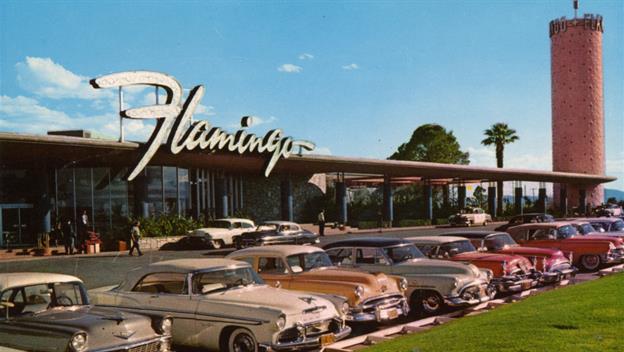
1946: Bugsy opens the Flamingo

History.com has this for 26 December:

On 26 December 1946, in Las Vegas, Nevada, mobster Benjamin “Bugsy” Siegel opened The Pink Flamingo Hotel & Casino at a total cost of six million dollars. The forty-acre facility wasn’t yet complete, and Siegel was hoping to raise some revenue with the grand opening.
Well-known singer and comedian Jimmy Durante headlined the entertainment, with music by Cuban band leader Xavier Cugat. Some of Siegel’s Hollywood friends, including actors George Raft, George Sanders, Sonny Tufts, and George Jessel were in attendance.
The grand opening, however, was a flop. Bad weather kept many other Hollywood guests from arriving and, because gamblers had no rooms at the hotel, they took their winnings and gambled elsewhere. The casino lost $300,000 in the first week of operation.
Siegel and his New York City “partners” had invested a million dollars in a property already under construction by Billy Wilkerson, owner of the Hollywood Reporter as well as some very popular nightclubs on the Sunset Strip. Wilkerson had wanted to recreate the Sunset Strip in Las Vegas, with a European-style hotel with luxurious rooms, a spa, health club, showroom, golf course, nightclub, and an upscale restaurant. But he soon ran out of money due to the high cost of materials immediately after the war.
Siegel, who held a largest interest in the racing publication Trans America Wire, was drawn to Las Vegas in 1945 by his interest in legalized gambling and off-track betting. He purchased The El Cortez hotel for $600,000, and later sold it for a $166,000 profit.
Siegel and his organized crime buddies used the profits to 'influence' Wilkerson to accept new partners. Siegel took over the project and supervised the building, naming it after his girlfriend Virginia Hill, whose nickname was The Flamingo because of her red hair and long legs.
Two weeks after the grand opening, the Flamingo closed down. It re-opened on 1 March 1947, as The Fabulous Flamingo. Siegel forced Wilkerson out in April and, by May, the resort reported a profit, but it wasn’t enough to save Siegel.
Convinced that Siegel wasn’t giving them a “square count”, it is widely believed that his partners in organized crime had him killed while he was reading the paper on 20 June 1947, at his Beverly Hills, California mansion. Hill was in Paris, France, having flown the coop after a fight with Siegel ten days prior. The crime remains unsolved to this day.
Surviving a series of name and ownership changes, the hotel is known today as The Flamingo Las Vegas, owned and operated by Harrah’s Entertainment. The property offers over three thousand hotel rooms and a seventy-thousand-square-foot casino.
Rico says he's never been, and isn't likely to...

Radiohead releases Bond song


Time has an article by Daniel White about yet another Bond theme song:
Radiohead has a Christmas present for you: their take on a James Bond theme song.
The British band was apparently tapped to record the title track for the latest Bond film, Spectre, but the studio ended up going with fellow Englishman Sam Smith to sing the theme. Still, Radiohead found that the song “became something of our own, which we love very much” and they decided to release the track to fans on Christmas, tweeted front-man Thom Yorke (photo). “As the year closes we thought you might like to hear it,” he added. “Merry Christmas. May the Force be with you.”
You can stream the song via Soundcloud.
Rico says the original is still the best:


Rico asks if everything has to have Star Wars references now?

25 December 2015

Music for the day

Rico says it's another piece of his childhood: Happiness Stan from Ogden's Nut Gone Flake by The Small Faces:http://tvtropes.org/pmwiki/pmwiki.php/Music/OgdensNutGoneFlake

Ogdens' Nut Gone Flake is the third studio album by The Small Faces, released in 1968. This album has become one of the seminal works of psychedelic rock, breaking new ground with the innovative, if impractical, circular sleeve, and in turning the whole of the second side to a whimsical fairy tale with spoken narrative interspersed with song, telling the tale of Happiness Stan and his search for the missing half of the moon. The band originally approached Spike Milligan to speak the narrative, but when he turned them down they turned to the veteran radio entertainer Professor Stanley Unwin, whose trade mark was Unwinese, or Basic Engly Twenty Fido, a surreal and mangled form of English inspired by Lewis Carroll's Jabberwocky. The first side is a mixture of hard rocking, music-hall and East End pub knees-up.
It is also their final studio album before the band's break-up in early 1969, and is their final studio album to feature Ronnie Lane. The band would release a further two albums in a late-1970s reunion, although these are often left out of the band's discography.

Nigerian scam for the day

They're baaack:
re:TRANSFER OF $3.5 MILLION.
From: Mrs.MickyAdd to Contact
Sent: Fri, 25 Dec, 2015 at 18:01
To: Recipients
From: World Bank Switzerland,
No 1 Postfach CH 4002 Basel Switzerland .
re:TRANSFER OF $3.5 MILLION 
From: Mrs.Micky Watts,
I wish to keep you posted on the outcome of  our emergency meeting with the World Bank president, Dr. Jim Yong Kim,international monetary fund (IMF), London and Paris club and (UN) I hereby inform you that your winnings/inheritance payment file have been Signed and forwarded to Zenith Bank Plc Nigeria  where you will be receiving your fund via online banking transfer which you will need to do by your self from any computer in your house or office .
Therefore you are advised  to contact Mr. Jim Obodo with the below information for your immediate payment.

Below is Mr. Jim Obodo your paying officer from Eco Bank Plc, Benin Republic.

Name: Mr.Jim Obodo
Email: obodojim@yahoo.com

Best Regards,
Mrs.Micky Watts.
World Bank International Auditor
Rico says he's still unclear on who falls for this bullshit...

Star Wars, the prequel

Rico's friend Kelley, a bit twisted himself, sends this:


The world's biggest army?


The BBC has an article about an unlikely army:
In the Star Wars universe, Stormtroopers are the armor-clad foot soldiers of the Empire, with hundreds (perhaps thousands) can be seen in the films, gamely battling the Rebellion. But how many Stormtrooper toys exist in our world? Are they the biggest secret army on Earth?
This question is more difficult to answer than you might think. I had a bad feeling about the chances of success but, as Yoda would put it: "Do. Or do not. There is no try."
The toys based on the original films were made under license by the US firm, Kenner, between 1978 and 1985. Kenner was absorbed into Hasbro in the 1990s. Now the toys are made by Disney. But none of these companies could give me sales figures for the number of Star Wars toys sold.
So, as Star Wars figures are popular with collectors, I asked several online communities if they had any idea how many there were. No-one had a number, but everyone agreed it was probably big. One enthusiast claimed to have more than two hundred Stormtroopers in his personal collection.
My first significant breakthrough came from an unlikely source: the Leicestershire County Council Museum Service. The original Star Wars toys were produced under license in the UK by a company called Palitoy. They had a factory in Coalville in Leicestershire, and the museum inherited some of its paper. An internal company newsletter from 1985 revealed it had sold 25 million action figures in the UK alone, more than one toy for every child in the country at the time.
Palitoy was famous for making a piece of Star Wars merchandise that has now become one of the most expensive to buy: a cardboard Death Star. Its designer, Bob Brechin, says Palitoy made its own model because the Kenner plastic model wasn't going to be ready for sale at Christmas of 1978.
"It was basically two floors with about ten rooms in it, with a little piece on the top with a gun emplacement, basically half a Death Star, so it was like a dome. And, of course, being in cardboard it got damaged, so they are very rare. So if you get a really pristine Death Star in the box, it's worth a lot of money… I wish I had kept a few."
Specialist auction house Vectis has sold one of these Death Stars for almost $7,500. I wondered whether Vectis might have any idea how many Stormtroopers there are in the world but, sadly, they didn't.
I was not having much luck, but as Obi-Wan Kenobi, put it: "In my experience there is no such thing as luck." So I persisted, and my next call, to Chris Taylor, author of How Star Wars Conquered the Universewas very productive. "One figure we do know is that a total of three hundred million Star Wars figures, of all varieties, were sold by 1985," he told me. "So already by 1985, you have more Star Wars figures in general in the world than Americans." From this I estimate that there were about ten million Stormtroopers by 1985.
But that was thirty years ago. What's happened since?
In 1999, Lego started making Star Wars toys. It was, as Ahsoka Tano would have said: "a new day, a new beginning". These toys have been a big success, spawning their own spin-offs, including computer games and books. And Lego was able to tell me how many Stormtrooper mini-figures it has sold: one billion.
That's a massive army. The International Institute for Strategic Studies estimates there are just under twenty million military personnel on Earth today, so Lego Stormtroopers alone outnumber every army on Earth by about fifty-to-one. So, if there were a battle between Stormtroopers and humans, it would surely be a massacre.
Or maybe not.
Chris Taylor points out that the Stormtroopers' armor, apart from being the wrong color from the point of view of camouflage, seems remarkably ineffective, as just one shot hitting a Stormtrooper in the arm or the chest sometimes appears to be enough to put it out of action.
Fans have also developed theories to explain why their shooting is so inaccurate. Taylor's own theory, having tried on a helmet, is that their field of vision is very limited.
Stormtroopers might have had better vision if some of the original sketches by artist Ralph McQuarrie had been selected:
 
But there is another point, too.
"I think the human race could win, because Stormtroopers were originally designed by George Lucas to represent the US military in Vietnam," says Taylor. "So the whole idea was always that the Empire would lose to a lower level of technology. The Vietcong, in effect, became Ewoks at the end of the Return of the Jedi, and that is the whole lesson of Star Wars, that you could win even if your numbers are small."
Rico says that everyone's taking this whole Star Wars thing a little too seriously... (Ewoks as the Vietcong? Really?)


Nineteenth century history for the day


The BBC has an article by Jason Farago about an infamous woman:
It is a common refrain in our Kardashian-besotted times: once our celebrities were famous for their talents, now they are only famous for being famous. A bit of sex appeal and a lack of shame are all it takes, we wail, to win adoring crowds and reams of press coverage. But there has always been more than one way to earn public renown and, in mid-nineteenth century Paris, France, the most famous celebrity of the age was renowned not for her brains or her power, but for something much less dignified.
From a nearly penniless sex worker, she rose to massive fortune and major political influence
One hundred and fifty years ago, as France passed from monarchy to republic to empire, the courtesan known as La Païva (photo) set out to conquer Parisian society and pulled it off so grandly that even she was surprised. From a nearly penniless sex worker, she rose to massive fortune and major political influence, with Emperor Napoléon III himself among her many admirers.
La Païva, as her contemporaries understood, was more than just a courtesan, but an archetypical figure of the European nineteenth century, when tectonic shifts in social organization saw the old order give way, and a new class of capitalists and empire-builders set about remaking the world. Her waist was large, and her face was described by writers of the time as mannish. Yet La Païva had a virtue greater than beauty, and more enduring too: steely, total ambition.
She was born in Russia in 1819, the child of Polish and German Jews in a land not hospitable to her religion. We know little about her youth: Esther Pauline Lachmann was her given name, though she soon adopted the name Thérèse, the first of many French affectations, and later called herself Blanche. By seventeen she was married, to a tailor with tuberculosis. She dutifully bore him a son but, less than a year later, she was off to Paris without her child, without even divorce papers, but with an iron determination to make it to the top of European society.
How she got to Paris we have no idea. But in those days the city had no shortage of courtesans and other sex workers, and it seems La Païva lodged in a maison de passe, a cheap hotel where prostitutes clubbed together and men came and went. Other girls were prettier, but Thérèse was in it to win it. She spent, by her own barely trustworthy account, three whole years preparing a social insurgency, eating little, concentrating her will, and determined that she needed to get somewhere more exclusive, more fashionable, and score a man better than the by-the-hour bourgeois of the red light district.
So, in 1841, at the age of 22, she set out for the Prussian spa town of Ems, with a trunk full of borrowed evening gowns and fake jewelry. She bagged herself a pianist, one Henri Herz, wealthy but not wildly loaded, who set her up with an apartment, jewels, the works. Soon she was back in Paris, hosting a successful salon, and not quite married. The Muscovite tailor was still her lawful husband, and though she now called herself Madame Herz, no one was fooled, least of all the gatekeepers at of King Louis-Philippe’s circle, who turned her away from court.
Thérèse was spending far too much in the mid-1840s. Herz had gone to the US, and his parents conspired to kick her out of their house. Her health was faltering, her jewels were at the pawn shop and, without Herz’ backing, she risked falling out of Paris’ artistic milieu and back into the brothel. So, in 1847, advised by, of all people, her dressmaker, she left Paris for London, where she had instant success. On her first day in town, at the Royal Opera House in Covent Garden, she seduced a loaded aristocrat. Soon she’d done even better, ensnaring a Portuguese marquis, Albino Francesco Araújo de Païva.
And, while she was gone, what do you know: revolution! In 1848, the July monarchy was ousted; three years later, the short-lived Second Republic gave way to a new empire, under Napoléon’s nephew. It was a good time for glitz, for reinvention, and for nouveaux riches, who sat atop massive fortunes gained in fresh industries and imperial ventures.
In the expanding Paris of Napoléon III and Baron Haussmann, with its new boulevards and massive construction, new money was no barrier to social standing. Ostentation was in, and so-called respectable people mixed freely with the demimonde. “Under the Second Empire,” wrote the art critic Charles Blanc, “a growing luxury so corrupted manners that an honest woman could no longer be recognized by her style of dress.”
The revolution of 1848 wept away the July Monarchy and ushered in the Second Republic.
The Second Empire was to be La Païva’s playground. Having got what she wanted from her spendthrift marquis, she dispatched him in a letter that concluded: “You go back to Portugal; I shall stay here and remain a whore.” (Soon enough, back in Lisbon, he duly committed suicide.) Now she was that rarest thing, a courtesan with a title, and with it she won a succession of paramours, ever more powerful and ever richer.
One gent she seduced by offering him her body for the length of time it took to burn ten thousand francs in her fireplace. She called her jewels “my children”; her actual kids were nowhere to be seen. She had become a legend, and raised her prices accordingly, settling at last for no one less than Guido, Count Henckel von Donnersmarck, a much younger Prussian and one of the richest men in Europe. He gave her everything, and underwrote the construction of her very own hôtel particulier with a very prominent address: 25, avenue des Champs-Élysées. She had hustled her way to the most glamorous street in Europe, and no one was going to forget it
Jean-Paul Sartre, in his play No Exit, imagined Hell as a Second Empire salon, and it might have looked something like La Païva’s receiving room: a massive gilded chamber whose ceiling mural depicted her as a goddess chasing the night away. The staircase was made of solid yellow onyx, and so was the bathtub, weighing in at half a ton and equipped with jewel-encrusted taps. (It’s still there, and you can visit if you know someone who’s a member of the Travellers Club.) The Goncourt brothers, in their Journal, called her house a Louvre de cul – a palace of… well, perhaps we ought not to translate that expression for a family website. Alexandre Dumas was even more scathing: “It’s almost finished. All it needs is a sidewalk.”
La Païva’s home on the Champs-Élysées reflected the gaudy style of the Second Empire in yellow onyx, gilt, and other forms of nineteenth century bling.
They could go hang, so far as La Païva was concerned. The men all came: the emperor, the industrial barons, and also writers such as Gustave Flaubert and Émile Zola, from whom she demanded, as the bare minimum recognition of her hospitality, magnums of rosé champagne. (She bathed in the stuff too, and milk as well at times.) The mansion was much more than a home for a woman who liked to live large. It was a public marker of what La Païva had accomplished; she had hustled all the way from the Moscow ghetto to the most glamorous street in Europe, and no one was going to forget it.
We have no proper portrait of her: a couple of iffy paintings, a photograph in profile. What did she really look like? Contemporary observers contradict one another; even then, she was more a myth than a woman. She was busty, even when young. Pale white skin, which she blanched further with rice powder. Probably a curvaceous figure; no willowy girl. As for her face, numerous writers classed her as what the French call belle-laide, or “ugly-beautiful.” Her eyes were described as too large, and her nose came in for particular criticism: shaped like a pear, they say. (Her Judaism played a part in this reception, without a doubt. One observer acidly wrote that “this wandering and victorious Jew” had nothing in common with “the pretty free spirits of the Second Empire.”)
But, by 1871, when the country was routed in the Franco-Prussian War, the mood towards La Païva has soured. She was accused of being a German spy. At the opera, so the story goes, the audience hissed when she entered. Her Prussian spouse did not help matters, but it was more than Germanophobia that did her in. The Second Empire’s loose morals and mixing of classes became suspect in the years after the defeat. Courtesans, in a weird way, became scapegoats for national weakness, and La Païva, not only a courtesan but a Jew to boot, was scapegoat number one.
It was time to go. La Païva and her last, richest husband lived out the rest of her days in a giant mansion in Silesia, in what today is Poland. After she died, in 1884, her widower, heartbroken, did not bury her. Instead he had her corpse embalmed in alcohol, cried over the dead courtesan for months, and then stored her body in the attic without telling his subsequent, shocked wife. In 1901, Kaiser Wilhelm granted Henckel von Donnersmarck the title of Fürst, the highest rank in the German nobility below the Kaiser himself. You have to wonder if he went upstairs to tell his preserved spouse the news: La Païva, at least in death, had become a princess.
Rico says okay, pickling the ex is a little over the top...
 

Casino Deposit Bonus