09 September 2017

History for the day: 1951: Paris celebrates its two-thousandth birthday

History.com has this for 8 July:


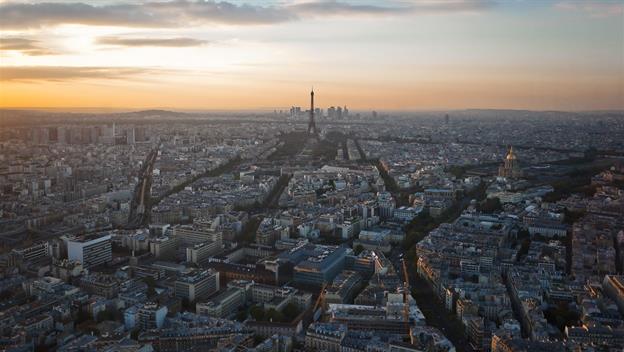
On 8 July 1951, Paris, the capital city of France, celebrated turning two thousand years old. In fact, a few more candles would technically have been required on the birthday cake, as the City of Lights was most likely founded around 250 BC.
The history of Paris can be traced back to a Gallic tribe known as the Parisii, who sometime around 250 BC settled an island (known today as Ile de la Cite) in the Seine River, which runs through Paris. By 52 BC, Julius Caesar and the Romans had taken over the area, which eventually became Christianized and known as Lutetia, Latin for “midwater dwelling”. The settlement later spread to both the left and right banks of the Seine and the name Lutetia was replaced with Paris. In 987 AD, Paris became the capital of France. As the city grew, the Left Bank earned a reputation as the intellectual district, while the Right Bank became known for business.
During the French Renaissance, from the late fifteenth century to the early seventeenth century, Paris became a center of art, architecture, and science. In the mid-1800s, Napoleon III hired civic planner Georges-Eugene Hausmann to modernize Paris. Hausmann’s designs gave the city wide, tree-lined boulevards, large public parks, a new sewer system and other public works projects. The city continued to develop as an important hub for the arts and culture. In the 1860s, an artistic movement known as French Impression emerged, featuring the work of a group of Paris-based artists including Claude Monet and Pierre-Auguste Renoir.
Today, Paris is home to some two million residents, with an additional ten million living in the surrounding metropolitan area. The city retains its reputation as a center for food, fashion, commerce, and culture. Paris also continues to be one of the world’s most popular tourist destinations, renowned for such sights as the Eiffel Tower (built in 1889 to commemorate the hundredth anniversary of the French Revolution), the Arc de Triomphe, the Champs-Elysees, Notre Dame Cathedral (built in 1163), the Luxembourg Gardens and the Louvre Museum, home to Leonardo da Vinci’s painting of the Mona Lisa.
Rico says that some places, like some people, get better as they get older... (But Hausmann's wide boulevards were to give Napoleon better fields of fire for his cannon.) Rico says he intends, given a lottery win, to take his fiancĂ© to Paris...

Irma gets worse

Emily Shapiro, Morgan Winsor, Julia Jacobo, and David Caplan have a Good Morning America article via Yahoo (with an unbloggable video) about Hurricane Irma:

Hurricane Irma, the most powerful Atlantic storm in a decade, hit Cuba overnight as a rare Category 5 storm, then shifted course toward the west coast of Florida.
The monster storm's shift in direction creates a "very, very dangerous situation for western Florida," said ABC News meteorologist Daniel Manzo (photo).
As of 0800 Saturday morning, Irma was a Category 4 with maximum sustained winds of 130 mph. It was about 225 miles from Miami, Florida, moving west-northwest at twelve miles an hour.
Naples, Fort Myers, and other communities on Florida's west coast could get slammed when Irma makes landfall as a Category 4 storm, which is expected to happen between early Sunday and early Monday. Landfall could occur as far north as Tampa.
Wind gusts in Florida were already picking up early Saturday, with Miami International Airport reporting a sixty mile-per-hour gust. 
Power outages, halted flights and empty ATMs in Florida. South Florida is already experiencing power outages, according to the Florida Power & Light Company. As of 0300 on Saturday, in Miami-Dade County there were 9,613 outages affecting 1,124,252 customers. In Broward County, which includes Fort Lauderdale, there were five hundred outages affecting a million customers.
Florida alone should anticipate days-long power outages, FEMA said.
Ahead of Irma's arrival in the Sunshine State, the last flights departed Friday night from Miami International Airport and Fort Lauderdale-Hollywood International Airport. Miami's airport officially remains open, while Fort Lauderdale's airport is closed for Saturday and Sunday.
Many ATM machines across southwest Florida were out of cash by late Friday night, after people stocked up in case Hurricane Irma causes power outages that make debit and credit card transactions impossible, The Associated Press reported.
Hurricane Irma 'could be worse' than Hurricane Andrew, Florida Governor Rick Scott warned.
On Friday, The National Hurricane Center cautioned that Irma, which then had maximum sustained winds of 155 mph, was "extremely dangerous", strong enough to uproot trees, bring down power poles, and rip off the roofs and some exterior walls of well-built frame homes."Obviously Hurricane Irma continues to be a threat that is going to devastate the United States," Brock Long, administrator of the Federal Emergency Management Agency (FEMA), said at a press conference on Friday morning. "We're going to have a couple of rough days."
Rainfall accumulations in southeast Florida and the Florida Keys are expected to reach ten to fifteen inches, with up to twenty inches locally. Eastern Florida, up the coast to Georgia, is expected to receive eight to twelve inches, according to the National Hurricane Center.
Approximately six million Floridians have either been ordered to evacuate or advised to leave voluntarily, the Florida Division of Emergency Management told ABC News late Friday night. When evacuation orders in South Carolina and Georgia are included, the number exceeds six million.
Georgia Governor Nathan Deal declared a state of emergency for nearly a hundred counties in his state, and South Carolina Governor Henry McMaster issued mandatory evacuations for barrier islands in Colleton, Beaufort, and Jasper counties.
 
Hurricane Irma traffic streaming out of Florida creeps along northbound Interstate 75 after a vehicle accident in Lake Park, Georgia on 6 September 2017.
There are facilities to shelter a million people in Florida, a FEMA spokesperson told ABC News, although there was a question whether there is enough staffing to serve all of those in shelters.
With the window closing fast for anyone wanting to escape, Irma hurtled toward Florida with 125 mph winds Saturday on a new projected track that could put the Tampa area, not Miami, in the crosshairs. Tampa has not taken a direct hit from a major hurricane in nearly a century.
"You need to leave, not tonight, not in an hour, right now," Governor Rick Scott warned residents in the evacuation zones ahead of the storm's predicted arrival on Sunday morning.
For days, the forecast had made it look as if the Miami metropolitan area of six million people on Florida's Atlantic coast could get hit head-on with the catastrophic and long-dreaded Big One.
The westward swing in the hurricane's projected path overnight caught many on Florida's Gulf coast off guard. By late morning, few businesses in St. Petersburg and its barrier islands had put plywood or hurricane shutters on their windows, and some locals groused about the change in the forecast. "For five days, we were told it was going to be on the east coast, and then 24 hours before it hits, we're now told it's coming up the west coast," said Jeff Beerbohm, a fifty-year-old entrepreneur in St. Petersburg. "As usual, the weatherman, I don't know why they're paid."
Tampa has not been struck by a major hurricane since 1921, when its population was about ten thousand, National Hurricane Center spokesman Dennis Feltgen said. Now the area has around three million people.
The new course threatened everything from Tampa Bay's bustling twin cities of Tampa and St. Petersburg to Naples' mansion- and yacht-lined canals, Sun City Center's sprawling compound of modest retirement homes, and Sanibel Island's shell-filled beaches.
Forecasters warned of storm surge as high as fifteen feet along a swath of southwest Florida and beyond. "This is going to sneak up on people," said Jamie Rhome, head of the hurricane center's storm surge unit.
With the new forecast, Pinellas County, home to St. Petersburg, ordered a quarter million people to leave, while Georgia scaled back evacuation orders for some coastal residents.
Irma has left more than twenty people dead in its wake across the Caribbean, ravaging such resort islands as St. Martin, St. Barts, St. Thomas, Barbuda, and Antigua. The storm weakened slightly in the morning, but was expected to pick up strength again before hitting the Sunshine State.
Meteorologists predicted its center would blow ashore Sunday in the perilously low-lying Florida Keys, then hit southwestern Florida and move north, plowing into the Tampa Bay area. Though the center is expected to miss Miami, the metro area will still get pounded with life-threatening hurricane winds, Feltgen said.
On Saturday morning, the state was already beginning to feel Irma's muscle. Nearly thirty thousand people had lost power, mostly in and around Miami and Fort Lauderdale, as the wind began gusting.
In Key West, sixty-year-old Carol Walterson Stroud sought refuge in a senior center with her husband, granddaughter and dog. The streets were nearly empty, shops were boarded up and the wind started to blow. "Tonight, I'm sweating," she said. "Tonight, I'm scared to death."
In one of the biggest evacuations ever ordered in the US, over six million people in Florida, more than one-quarter of the state's population, were warned to leave. Gas shortages and gridlock plagued the evacuations. Parts of interstates 75 and 95 north were bumper-to-bumper.
Some fifty thousand people crowded three hundred shelters across Florida. At Germain Arena, not far from Fort Myers, on Florida's southwestern corner, thousands waited in a snaking line for hours to gain a spot in the hockey venue-turned-shelter.
"We'll never get in," Jamilla Bartley lamented as she stood in the parking lot.
The governor activated all seven thousand members of the Florida National Guard, and thirty thousand guardsmen from elsewhere were on standby.
Major tourist attractions, including Walt Disney World, Universal Studios, and Sea World, prepared to close Saturday. The Miami and Fort Lauderdale airports shut down, and those in Orlando and Tampa planned to do the same later in the day.
With winds that peaked at 185 mph, Irma was once the most powerful hurricane ever recorded in the open Atlantic. Given its mammoth size and strength and its projected course, it could still prove one of the most devastating hurricanes ever to hit Florida and inflict damage on a scale not seen here in twenty-five years.
It could also test the Federal Emergency Management Agency's ability to handle two crises at the same time. FEMA is still dealing with aftermath of catastrophic Hurricane Harvey in the Houston, Texas area.
Ray Scarborough and his girlfriend Leah Etmanczyk left their home in Big Pine Key and fled north with her parents and three big dogs to stay with relatives in Orlando. He was twelve when Hurricane Andrew hit in 1992, and remembers lying on the floor in a hall as the storm nearly ripped the roof off his house. "They said this one is going to be bigger than Andrew. When they told me that, that's all I needed to hear," said Scarborough, now a forty-year-old boat captain. "That one tore everything apart."
Andrew razed Miami's suburbs with winds topping 165 mph, damaging or blowing apart over a hundred thousand homes. The damage in Florida totaled twenty-six billion dollars, and at least forty people died.
Rico says he's just as happy he didn't move to the Keys...

08 September 2017

History for the day: 1886: Geronimo surrenders

History.com has this for 4 September: Geronimo surrenders


On 4 September, 1886, Apache chief Geronimo surrendered to government troops. For thirty years, the mighty Native American warrior had battled to protect his tribe’s homeland; however, by 1886 the Apaches were exhausted and hopelessly outnumbered. General Nelson Miles accepted Geronimo’s surrender, making him the last Indian warrior to formally give in to government forces and signaling the end of the Indian Wars in the Southwest.

Geronimo was born in 1829 and grew up in what is present-day Arizona and Mexico. His tribe, the Chiricahua Apaches, clashed with non-Indian settlers trying to take their land. In 1858, Geronimo’s family was murdered by Mexicans. Seeking revenge, he later led raids against Mexican and American settlers. In 1874, the government moved Geronimo and his people from their land to a reservation in east-central Arizona. Conditions on the reservation were restrictive and harsh and Geronimo and some of his followers escaped. Over the next decade, they battled Federal troops and launched raids on white settlements. During this time, Geronimo and his supporters were forced back onto the reservation several times. In May of 1885, Geronimo and approximately a hundred and fifty followers fled one last time. They were pursued into Mexico by five thousand US troops. In March of 1886, General George Crook (1829–90) forced Geronimo to surrender; however, Geronimo quickly escaped and continued his raids. General Nelson Miles (1839–1925) then took over the pursuit of Geronimo, eventually forcing him to surrender in September near Fort Bowie along the Arizona-New Mexico border. Geronimo and a band of Apaches were sent to Florida and then Alabama, eventually ending up at the Comanche and Kiowa reservation near Fort Sill in the then-Oklahoma Territory. There, Geronimo became a successful farmer and converted to Christianity. He participated in President Theodore Roosevelt’s inaugural parade in 1905. The Apache chief dictated his autobiography, published in 1906 as Geronimo’s Story of His Life. He died at Fort Sill on 17 February 1909.

Rico says he was a valiant warrior...

Quake in Mexico

Frank Jack Daniel has a Reuters article about a big one in Mexico:

An earthquake of magnitude 8.1 struck off the southern coast of Mexico late on Thursday, the US Geological Survey (USGS) said, killing at least six people and triggering small tsunami waves but no major destruction.
The quake was apparently stronger than a devastating 1985 tremor that flattened swathes of Mexico City and killed thousands, but this time damage to the city was limited.
A number of buildings suffered severe damage in parts of southern Mexico. Some of the worst initial reports came from Juchitan in Oaxaca state, where sections of the town hall, a hotel, a bar, and other buildings were reduced to rubble.
Rescue workers labored through the night in badly affected areas to check for people trapped in collapsed buildings.
Windows also shattered at Mexico City's airport and power went out in several neighborhoods of the capital, affecting more than a million people. The cornice of a hotel came down in the southern tourist city of Oaxaca, a witness said. The tremor was felt as far away as neighboring Guatemala.
The epicenter of the quake was in the Pacific, 54 miles southwest of the town of Pijijiapan in the poor southern state of Chiapas, and 43 miles deep. Four people were killed in the state, Governor Manuel Velasco said. Two children were killed in neighboring Tabasco state, Governor Arturo Nunez said.
The quake triggered waves as high as three feet in Mexico, the Pacific Tsunami Warning Center said. Mexican television showed images of the sea retreating about fifty meters, and authorities evacuated some coastal areas.
"The tsunami risk on the Chiapas coast does not represent a major risk, it's not very big, it's not a major worry," President Enrique Pena Nieto said in a call to television network Televisa. The president said more aftershocks were likely and that people should carefully check their homes and offices for structural damage and for gas leaks. "We are alert," he said.
The USGS reported multiple aftershocks, ranging in magnitude from 4.3 to 5.7.
Classes were suspended in most of central and southern Mexico on Friday to allow authorities to review damage.
There was no tsunami threat for American Samoa and Hawaii, according to the US Tsunami Warning System. The national disaster agency of the Philippines put the country's eastern seaboard on alert, but no evacuation was ordered.
People in Mexico City, one of the world's largest cities, ran out into the streets in pajamas and alarms sounded after the quake struck just before midnight, a Reuters witness said.
Helicopters buzzed overhead a few minutes later, apparently looking for damage to buildings in the city, which is built on a spongy, drained lake bed.
In one central neighborhood, dozens of people stood outside after the quake, some wrapped in blankets against the cool night air. Children were crying.
Liliana Villa, 35, was in her apartment when the earthquake struck and she fled to the street in her pajamas. "It felt horrible, and I thought, 'this is going to fall'."
State oil company Pemex said it was still checking for damage at its installations. Pena Nieto said operations at the Salina Cruz refinery in the same region as the epicenter were temporarily suspended as a precautionary measure.
"I had never been anywhere where the earth moved so much. At first I laughed, but when the lights went out I didn't know what to do," said Luis Carlos Briceno, an architect, 31, who was visiting Mexico City. "I nearly fell over."
Rico says as if they didn't have enough problems...

07 September 2017

Trump for the day

Matt Bai has a Yahoo article about Trump's latest on immigration:

I’ve written a few times in the past about President Trump and immigration, and every time I’ve heard from angry Trump supporters who took issue with my characterizing him as anti-immigrant. I was trafficking in a blatant lie, they told me; Trump was dead set against illegal immigration, because he believed in a nation of laws, but that didn’t make him intolerant when it came to immigrants generally, as long as they followed the rules.
This argument gave me some pause. My own judgment was based principally on Trump’s rhetorical bile, which seemed to me self-evidently xenophobic.
But it was also true that a candidate could theoretically propose drastic policies to deter undocumented, potentially dangerous visitors, like building a wall on the Mexican border and shutting out refugees from countries at a higher risk of terrorist infiltration, while still believing in the essential value of controlled immigration.
Trump had, in fact, claimed to strike exactly that balance. In an interview with the conservative website NewsMax just after the 2012 election, he lambasted Mitt Romney’s idea of “self-deportation” as a “maniacal” idea. “He lost everybody who is inspired to come into this country,” Trump said then. “The Democrats didn’t have a policy for dealing with illegal immigrants, but what they did have going for them is that they weren’t mean-spirited about it.”
What we know now, though, well into Trump’s first year in office, is that my instinct here was right: Trump’s attitude toward immigration really isn’t all that nuanced, or all that humane. And it’s up to Republicans to decide whether their party still stands for anything beyond the reactionary worldview he embodies.
I say this not just because the President decided this week to eliminate special protections for immigrants who were brought here as children. While I think Trump’s policy is misguided, I don’t find his reasoning entirely specious.
Trump is right that immigration policy is better made by an actual, functioning Congress than by executive fiat, which is bound to be temporal and therefore destabilizing to everyone it affects. (President Obama probably wouldn’t disagree, and he’d have been thrilled to sign reasonable legislation that protected these so-called DREAMers, if only Congress could have passed anything that required the slightest compromise.)
There’s really no good reason that majorities in Congress can’t get behind a bill that both shields children raised in America and provides some added money for border enforcement. If Trump’s stand forces the parties to do exactly that, then he’ll deserve some credit for putting the onus of lawmaking back where it belongs.
But that decision can’t be viewed in isolation. You also have to look at Trump’s enthusiastic support, in a speech at the White House last month, for a plan that would slash legal immigration, overturning decades of bipartisan measures that made it easier for immigrants to bring their relatives to the country and that opened America’s borders to refugees from persecution. We’re not talking about potential terrorists here, or drug mules tunneling under the desert in the dark of night. We’re talking about the kind of industrious, risk-taking immigrants without whom most of us wouldn’t be here to debate these things today. (This includes Trump’s grandparents and mother, all of whom immigrated in the late nineteenth or early twentieth centuries.)
You also have to look at the astonishing comments made recently by Stephen Miller, the young adviser who seems to most faithfully channel Trump on these cultural issues, and who seems to say something breathtaking every time he shows up in public.
This time, Miller, who sounds very much like the smug, provocative kid in a senior-year philosophy seminar whom every other kid wants to toss out the library window, lectured reporters on the history of the Statue of Liberty. He pointed out that the words now enshrined in our national consciousness, “Give me your tired, your poor, your huddled masses” and so on, were added years after the statue was unveiled, and therefore, I guess, really weren’t all that relevant.
Thus did he become the first White House spokesman in history, though not the first white nationalist, by a long shot, to dismiss the American creed on immigration as a piece of propaganda. I don’t know how Miller’s ancestors ended up in America. I’m guessing it wasn’t on the Mayflower.
No, the mounting body of evidence here is pretty clear. Trump is not a guy who resents illegal immigration because it’s unsafe for the country and unfair to the hardworking, law-abiding immigrants who embrace our laws and ideals and who give up everything they’ve known for their children’s future. Trump is a guy who resents immigrants, period. He is a neo-nativist. His “America first” actually means “Americans only”.
His story about combating furtive outsiders who steal jobs and menace communities is a simplistic story meant to arouse age-old passions and prejudices. His aim isn’t to restore order and lawfulness, but to incite disorder and fear, to harvest cheap adoration from those who fear the unfamiliar.
This is why, long before he ever ran for president, Trump made a crusade of falsely attacking Obama’s lineage. It wasn’t only because he was trying to fuel his own political ambitions. It was because, when you fundamentally believe that outsiders are the cause of economic and social disruption, it stands to reason that the President you disdain must be an outsider, too.
This is a worldview, not incidentally, that puts Trump outside the mainstream of his Republican predecessors. Ronald Reagan signed legislation extending amnesty to millions of undocumented immigrants. George H.W. Bush expanded legal immigration. George W. Bush made outreach to immigrants a centerpiece of his “compassionate conservatism”.
The intellectual argument for cultural conservatism, with its rejection of identity politics and diversity-by-quota, idealizes our tradition of assimilating immigrants. It holds that we are still the melting pot society, accepting anyone who will adopt our national customs and credos, assuring equality of opportunity but not equality of outcomes.
That’s not where Trump is. He seeks to restore the Buchananite faction of the party. (Pat, not Daisy.) He doesn’t believe there’s room for a melting pot in a world where factories relocate or shutter, where terrorists loom in the darkness and where most of the immigrants aren’t white. These aren’t simple issues. Immigration is a harder sell in an imperiled empire than in a thriving incubator of the middle class. It’s not coincidence that Trump’s moment coincides with the rise of other nationalist movements in the world, where workers feel threatened by declining industries and porous borders.
But Republicans, in particular, have a choice to make. They can hold firm to the traditional conservative argument, or they can allow their party to be transformed by Trumpism. They can stand up for our essential identity as a nation of immigrants, or they can blame outsiders for all that ails the society. What you can’t do, anymore, is tell me that somehow this President does both.
Rico says he did not vote for the guy, so don't blame him...

Wild about Harry

Vanity Fair has an article by Sam Kashner about Meghan Markle, Prince Harry's beautiful girlfriend:

Meghan Markle (photo, top) was going to London, England. She had a week’s hiatus before returning to Toronto, Canada to film the hundredth episode of Suits, a surprise-hit series on the USA Network, now in its seventh season. On a rainy afternoon in June, Markle came to her front door and welcomed me into her home on a quiet, tree-lined street in Toronto. Markle was wearing a red, knee-length floral dress (“Erdem, a designer I’ve been wearing for years”), with her rescue dogs, Bogart and Guy, wagging their tails beside her. A slim brunette with a lightly freckled, glowing complexion and an upturned nose, she looks like the sun-kissed California girl she’s always been.
Markle had prepared a lunch of organic greens, a crusty bread to be dipped in olive oil, and pasta tossed with chilies bought from “a little place called Terroni, which they have in Los Angeles and in Toronto. They’re really hot, but if you’re good with heat, then I think they’re going to be your new favorite thing. I’ll give you a little jar to take home.” Her warmth is genuine. She seems to be the happy genius of her home of seven years. “Seven Canadian winters!” she exclaims about her time filming Suits. “A long time for someone who grew up in Southern California.” She has tried to make her Canadian house look like a California bungalow, exposing the hardwood floors and letting in as much light as possible.
For almost a year, rumors have flown about the romance between the actress and Britain’s Prince Harry (photo, bottom), the redheaded hell-raiser, and former Army captain who had completed two tours of duty in Afghanistan, and all-around favorite royal. If Markle and Prince Harry are indeed headed to the altar, she will become the first American to marry into the royal family since Wallis Simpson famously wed King Edward VIII, forcing his abdication from the throne, almost eighty years ago.
Markle is the calm in the center of the media storm inspired by her year-long relationship with the Prince. The couple met in London, England through friends in July of 2016, Markle says. Since then, media coverage of their romance has been so intense, and much so unpleasant, that Prince Harry was moved to issue a statement asking the press and public, essentially, to back off. They haven’t. Even Bogart and Guy have become Instagram stars.
Markle, new to fame, has handled the hoopla with surprising aplomb. “It has its challenges, and it comes in waves; some days it can feel more challenging than others,” she says. “Right out of the gate it was surprising the way things changed. But I still have this support system all around me, and, of course, my boyfriend’s support.”
While arguably the most popular member of the British royal family, Prince Harry is also the most iconoclastic. He’s loved for having been the bad boy in his youth and now the regular guy of the family, for his ten years of army service, including his time in Afghanistan (the only place he ever felt “normal”, he’s said), and in recent years for his philanthropy on behalf of combat veterans.
Vanity Fair contributing editor Sally Bedell Smith, who wrote a biography of Prince Charles, says that “Harry, who could have been the scapegrace sibling, was that for a while.” There was the widely released photo of him looking tipsy at a London nightclub. There was the scuffle with a photographer outside another London nightclub at around three am that resulted in the photographer’s cut lip. There was the “Colonials and Natives” costume party of 2005, in Wiltshire, to which Harry came dressed like Nazi general Erwin Rommel, complete with desert uniform, Wehrmacht badge, and swastika armband. A photo of the prince in this costume landed on page one of the British tabloid The Sun. The public was outraged, and Harry apologized. More recently, cell-phone pictures of Harry carousing with friends in Las Vegas, Nevada in 2012 went viral. “It was probably a classic case of me being too much Army and not enough Prince,” he later admitted.
After Harry ended his stint in the Army, he focused on veterans’ issues. In September of 2014, he organized the Invictus Games, a charity event for wounded combat veterans, named after the 1875 William Ernest Henley poem schoolboys in England once had to memorize, with the famous lines: “I am the master of my fate / I am the captain of my soul.” When Harry turned thirty, he inherited sixteen million dollars from the estate of his mother, Princess Diana, and that is when he determined to spend his time and efforts supporting veterans with physical and psychological injuries.
As Diana’s younger son, Harry continues to bask in the public’s love for the People’s Princess. He has been forgiven his occasional wildness, his drift, the acting out of a broken heart that had sent him into grief counseling in his late twenties. As the royal favorite, there is keen interest in, and much speculation about, the woman he may marry. A rumor floating in cyberspace has that he popped the question last month when they were vacationing in Botswana.
As in the 1957 Marilyn Monroe-Laurence Olivier film, The Prince and the Showgirl, a feeding frenzy surrounds royal and non-royal couplings. Though Markle is extremely pretty and she stars in a television show, you would never call her a “showgirl”. She is too serious, too well brought up. (And outside of Vegas, who’s called a “showgirl” anymore, anyway?) “Grounded” is the word that is often used to describe her.
“I was born and raised in Los Angeles, a California girl who lives by the ethos that most things can be cured with either yoga, the beach, or a few avocados,” she once wrote. Until recently, she maintained a popular lifestyle blog called The Tig. She is a self-described foodie, a passion, incidentally, given to her character on Suits. “I mean, this bread is so good!” she enthuses over the delicious meal she prepared. “It’s that perfect crunch and then the softness. They call it the ‘crumb’, all of these little holes!”
Suits, in which Markle plays ambitious paralegal-turned-lawyer Rachel Zane, first brought the actress to wide attention. (Before that she’d appeared briefly in the movies A Lot Like Love and Horrible Bosses and had minor roles on television in the science-fiction drama Fringe and the soap opera General Hospital, among others.) I asked the boyishly attractive actor Patrick J. Adams, who plays the likable-but-fraudulent lawyer Mike Ross, Rachel’s love interest on Suits, to describe the series and its popularity. 
“I’ve never defined myself by my relationship,” says Markle, who adds that she and Prince Harry were “quietly dating for about six months before it became news”. 
“Getting to a hundred episodes is pretty surreal,” Adams says. “I never thought that a story about six people working in a law firm in New York City would be something that would capture people’s interest all over the globe. I was backpacking through New Zealand a couple of years ago and stopped to help a Swedish guy who had twisted his ankle. He looked up at me, and his eyes went wide, and all he could talk about was how badly he wanted Mike and Rachel to figure things out.”
Mike Ross’ relationship with Rachel Zane is one of those long, simmering teases that take several episodes to come to a boil, but it was clear from their first meeting that they were meant to be together. “I think Mike and Rachel are a classic Romeo-and-Juliet story,” Adams believes. “They come from totally different sides of the tracks. Rachel has taken the path well traveled, worked hard, and followed the rules of the game. Mike is a naturally gifted, brilliant guy but has followed exactly none of the rules.”
When it came to casting Rachel Zane, “we needed somebody in the role that was absolutely engaging, relatable, young enough, who is beautiful in a non-traditional way, and who had an authenticity,” says Bonnie Hammer, chairman of NBCUniversal Cable Entertainment Group.
Aaron Korsh, the show’s creator, recalls that Rachel Zane was particularly challenging to cast because the role required “toughness and attitude, while still being likable. We all looked at each other after Markle’s screen test like, Wow, this is the one! I think it’s because Meghan has the ability to be smart and sharp, but without losing her sweetness.”
When she auditioned for the role, Markle showed up in black jeans, a plum-colored spaghetti-strap top, and heels. It suddenly occurred to her that for the screen test she needed to look less casual and more like a lawyer. She dashed into an H&M and bought a little black dress for $35. Sure enough, she was asked to change into the dress, which she hadn’t even tried on. It fit.
“My parents had been so supportive,” she told Vanity Fair, “watching me audition, trying to make ends meet, taking all the odds-and-ends jobs to pay my bills. I was doing calligraphy, and I was a hostess at a restaurant, all those things that actors do (Kaylee Cuoco on The Big Bang Theory comes to mine). My father knew how hard it is for an actor to get work, so he above all people was so proud that I was able to beat the odds.”
One of the strongest bonds Prince Harry and Markle share is their philanthropy. For Markle, it began at an early age. Her mother, Doria Ragland, made sure that her little girl knew about the greater world and its political and economic challenges when she was growing up in Los Angeles.
“The people who are close to me anchor me in knowing who I am,” Markle says. “The rest is noise.”
Meghan’s father, Thomas Markle, was a successful lighting director in Hollywood; he lit the popular sitcom Married with Children and, for 35 years, General Hospital. Markle recalled that “every day after school for ten years, I was on the set of Married with Children, which was a really funny and perverse place for a little girl in a Catholic-school uniform to grow up.”
Markle says that “What’s so incredible, you know, is that my parents split up when I was two, but I never saw them fight. We would still take vacations together. My dad would come on Sundays to drop me off, and we’d watch Jeopardy, eating dinner on television trays, the three of us. We were still so close-knit.” When she turned eighteen, she left for Northwestern University, in Evanston, Illinois, becoming the first person in her family to graduate from college, and double-majored in theater and international relations. In line with her international-relations major, Markle worked at the American embassy in Argentina her senior year, “so I had been in a completely different world and then suddenly jumped into this one.”
Markle thinks her social awareness began during the South-Central riots, in Los Angeles, California, sparked by the police beating of Rodney King in 1991, and the subsequent riots in 1992, when she was eleven years old. “They had let us go home from school during the riots, and there was ash everywhere.” As the ash from street fires sifted down on suburban lawns, Markle remembers, she said, “Oh, my God, Mommy, it’s snowing!”
“No, Flower, it’s not snow,” Doria answered. “Get in the house.”
Markle’s friends, family, and fellow actors on Suits are respectful of her relationship with Prince Harry, which has come under harsh criticism in the UK. Tabloids report that Queen Elizabeth will be hesitant to sanction such a match for her grandson, following the ancient rule barring Catholics, commoners, and divorcĂ©es. Though not raised Catholic, Markle graduated from a Catholic high school and was married for almost two years to producer Trevor Engelson, and she adds a new wrinkle: her mother is black, her father white. Criticism of Markle has been snob-ridden, racist, and uninformed. The trolls have really gone after her.
Last November, the Daily Star Online announced, “Prince Harry could marry into gangster royalty—his new love is from a crime ridden Los Angeles neighborhood”; “the royal’s future mother-in-law still lives in Crenshaw, surrounded by bloodbath robberies and drug-induced violence.”
“I told her, ‘You’ve got to be who you are, Meghan. You can’t hide,’ ” says Serena Williams.
How does Markle handle the tabloid nonsense about her and Harry? “I can tell you that at the end of the day I think it’s really simple,” she says. “We’re two people who are really happy and in love. We were very quietly dating for about six months before it became news, and I was working during that whole time, and the only thing that changed was people’s perception. Nothing about me changed. I’m still the same person that I am, and I’ve never defined myself by my relationship.”
The media frenzy seems to bother the Prince more than it does Markle. The official statement issued from Kensington Palace by his communications secretary read, in part, “Meghan Markle has been subject to a wave of abuse and harassment. Prince Harry is worried about Ms. Markle’s safety and is deeply disappointed that he has not been able to protect her.” As for Markle, she prefers what the British call “ostriching.” She says, “I don’t read any press. I haven’t even read press for Suits. The people who are close to me anchor me in knowing who I am. The rest is noise.”
Markle’s parents “crafted the world around me to make me feel like I wasn’t different, but special,” as she wrote in a 2015 essay for Elle. As dolls in the 1980s were generally sold in sets of black and white, for Christmas one year her father bought “a black mom doll, a white dad doll, and a child in each color. My dad had taken the sets apart and customized my family.”
Problems began in the seventh grade, when she had to complete a mandatory census by checking one of four boxes: “white, black, Hispanic, or Asian.” The pale, freckled, curly-haired Markle felt that to choose either white or black would be a rejection of one of her parents. Her teacher told her to check “Caucasian” because she looked white, but she couldn’t. She ended up leaving the boxes unchecked. “I left my identity blank, a question mark, an absolute incomplete, much like how I felt,” she once said.
Because she is light-skinned and has not made an issue of being bi-racial, though she has embraced it, she has auditioned for white as well as black and Latina roles. There was widespread disbelief among viewers in Season Two of Suits when her black father, a high-powered lawyer played by the charismatic actor Wendell Pierce (of Treme fame), first appeared on the show; most people didn’t think her character, or the actress playing her, was bi-racial.
One thing Markle noticed about how she was perceived was that “at almost every photo shoot they would airbrush out” her freckles. “I’ve always loved my freckles,” she now says, so, when she was photographed for Vanity Fair, she was “thrilled to work with Peter Lindbergh because he rarely retouches and he believes in such little makeup. I gave him a big hug and said, ‘I am so excited to work with you because I know we will finally be able to see my freckles!’ ”
More importantly, what does Queen Elizabeth think of the prospect of a marriage between her grandson and the American divorcĂ©e? When asked if she thought the Queen opposed the match, Sally Bedell Smith, who has written biographies of Queen Elizabeth, Princess Diana, and, most recently, Prince Charles, said that “the stakes are obviously lower in the case of Harry because he is now fifth in line to the throne [in descending order, the others are Prince Charles, Prince William, Prince George, and Princess Charlotte]. They have to be concerned; William and Harry will always have a special place because, whatever you think of Diana, she has a magical aura that continues. The fact that Harry and William are half Diana, that will never go away.”
“The Queen is remarkably open-minded and she’s very tolerant,” Smith observes. William was allowed to cohabit with Kate Middleton, even though she’s the daughter of “a very middle-class family. The Queen just looked at who Kate was and that she was in love with her grandson, and that she knew how to conduct herself with dignity and discretion, and that was the most important thing. I would imagine that the Queen’s view of this would be: if they’re in love and they’re well suited, then they should proceed.”
“At the end of the day I think it’s really simple,” Markle says. “We’re two people who are really happy.”
Bonnie Hammer expressed her concern about Markle’s sudden, international fame. “She isn’t somebody who was already a celebrity, who had paparazzi tracking her day and night in Hollywood or New York City or Toronto. She’s going through something that should be the most glorious and open time in her life, to be able to share, but because of circumstances, that’s very hard.”
Markle credits the rock-solid support from her close friends for helping to sustain her. The international tennis great Serena Williams (who recently graced the cover of Vanity Fair) is one of those friends. The two met about seven years ago at the Super Bowl. “Her personality just shines,” Serena said about Markle, who asked her advice on how to handle some of the more extreme results of fame, such as paparazzi showing up at her house and chasing her. “I told her, ‘You’ve got to be who you are, Meghan. You can’t hide.’ ”
Another close friend is the Bahrain-born fashion designer Misha Nonoo. They met in Miami through a mutual friend and immediately bonded. “Her greatest strength is her compassion for others,” says Nonoo. “Much of the work she does is unseen by the public.”
Another close friend is the actress Abigail Spencer, who has been a Suits cast member. When asked why she thinks Harry was drawn to Markle, Spencer says, “She’s got warm elegance, though her style is hard to pin down. It’s classy and timeless. When you’re talking to her, you feel like you’re the only person on the planet. And it’s just wonderful to see her so in love.”
It was raining in Toronto the day we met, and, while this sounds corny, it also happens to be true: as she resumed speaking about Prince Harry, the sun came out, ushering in a brilliant, warm day.
Markle suggested that we move outside into the small garden behind the house, where she opened up even more about the object of her affection, her “boyfriend”, as she calls the Prince.
“We’re a couple,” she explains. “We’re in love. I’m sure there will be a time when we will have to come forward and present ourselves and have stories to tell, but I hope what people will understand is that this is our time. This is for us. It’s part of what makes it so special, that it’s just ours. But we’re happy. Personally, I love a great love story.”
Just before I filed Markle’s story, she texted me, “going where the wi-fi is weak,” which turned out to be Botswana, a place Harry first visited twenty years ago, shortly after his mother’s death, a place of healing where they celebrated Markle’s 36th birthday. Whatever the future of their relationship, one suspects that, had she lived long enough to meet Meghan, Diana, beloved for her philanthropy as well as her shy beauty, would have approved.
Editor's note: The sentence regarding the first time Markle met Prince Harry has been amended. Markle told Vanity Fair that the couple met in July of 2016.

Old joke

Time flies like an arrow. Fruit flies (like the ones in Rico's kitchen) like a banana. (Okay, old joke, but still true.)

06 September 2017

DACA

Larry Neumeister and Gene Johnson have an article from The Associated Press about more lawsuits against Trump:


On Wednesday, fifteen states and the District of Columbia on sued to block President Trump's plan to end a program protecting young immigrants from deportation, an act Washington State's attorney general called "a dark time for our country."
The lawsuit was filed in the Eastern District of New York. The plaintiffs were New York, Massachusetts, Washington, Connecticut, Delaware, the District of Columbia, Hawai'i, Illinois, Iowa, New Mexico, North Carolina, Oregon, Pennsylvania, Rhode Island, Vermont, and Virginia.
On Tuesday, Attorney General Jeff Sessions said a program, known as the Deferred Action for Childhood Arrivals, or DACA, will end in six months, to give Congress time to find a legislative solution for the immigrants. The participants were brought to the US illegally as children, or came with families who overstayed visas.
Those already enrolled in DACA remain covered until their permits expire. If their permits expire before 5 March 2018, they are eligible to renew them for another two years as long as they apply by 5 October 2017, but the program is not accepting new applications.
Opponents of the program said they are pleased with the Trump administration's decision. They called DACA an unconstitutional abuse of executive power but proponents of the program said the move by Trump was cruel.
Washington State Attorney General Bob Ferguson said the action violates the due process rights of the immigrants. He said he fears the information the immigrants provided the government to participate in DACA could be used against them.
"It's outrageous, it's not right," an emotional Ferguson said at a news conference in Seattle. "As attorney general for the state of Washington, I have a hammer, it's the law."
Washington Governor Jay Inslee joined Ferguson at the news conference and said "this is one more of a long train of abuses that this president has attempted to foist on this great nation."
Earlier this year, Ferguson sued Trump over his travel ban, which resulted in a Federal judge blocking nationwide enforcement.
Rico says this is far from over...

Paying for Harvey

Andrew Taylor of The Associated Press has a Yahoo article about the recent House vote:

Majority Leader Kevin McCarthy, a Republican from California, at left, and Representative Cathy McMorris Rodgers, a Republican from Washington State and chair of the Republican Conference, listen as Speaker of the House Paul Ryan, at right, a Republican from Wisconsin, talks about Harvey relief efforts after a meeting with House Republicans on 6 September 2017, on Capitol Hill
The House on Wednesday overwhelmingly passed nearly eight billion dollars in Hurricane Harvey disaster relief, as warring Republicans and Democrats united behind help for victims of that storm as an even-more powerful new hurricane (Irma) bore down on Florida.
The 419-3 vote sent the aid package, likely the first of several, to the Senate in hopes of sending the bill to President Donald Trump before dwindling Federal disaster reserves run out at the end of this week.
"Help is on the way," said Texas GOP Representative John Culberson, whose Houston district was slammed by the storm. "The scale of the tragedy is unimaginable. But in the midst of all this, and all the suffering, it really reflects the American character, how people from all over the country stepped up to help Houstonians recover from this."
The first installment in Harvey aid is to handle the immediate emergency needs and replenish Federal Emergency Management Agency reserves in advance of Hurricane Irma, which is barreling through the Caribbean toward Florida.
"This is a chance to be your brother's keeper," said Houston Democratic Representative Al Green. (No, not that Al Green.) "This is chance for the unity that we express when we're before the cameras to manifest itself in the votes that we cast here in Congress."
Far more money will be needed once more complete estimates are in this fall, and Harvey could end up exceeding the hundred and ten billion dollar government cost of Hurricane Katrina.
"My friends and neighbors' homes were completely flattened by Hurricane Harvey's winds. Businesses were destroyed," said Representative Blake Farenthold, a Republican from Texas. "FEMA will be out of money in just two or three days if we don't pass this."
Politics quickly intruded as Democratic leaders insisted they would back the measure in the Senate, but only if it were linked to a short-term increase in the nation's borrowing limit, not the longer-term hike that Republicans and the Trump administration want.
Some Democrats from the New York delegation reminded Texas Republicans that they opposed a larger aid bill for those harmed by Superstorm Sandy in the Northeast five years ago. "What you did to us during Superstorm Sandy should not stand, should not be done to any other people, anyplace in the country," said Representative Eliot Engel, a Democrat from New York. "We're one country, we're Americans. We need to help those who need help."
In the Senate, GOP leaders want to link a long-term increase in the debt limit, until 2019, to the Harvey aid, but that plan faces opposition from conservatives and thus will need Democratic votes. "I think it's a terrible idea," said House Freedom Caucus Chairman Mark Meadows, a Republican from North Carolina, who conceded that conservatives were getting outmaneuvered. "I think at this point there are bigger issues that we have to focus on," Meadows said.
House Minority Leader Nancy Pelosi, a Democrat from California, and Senate Minority Leader Chuck Schumer of New York want to retain Democratic influence and trying to ensure the Republican-controlled Congress addresses health care and immigration as the hectic fall agenda kicks off. "Given Republican difficulty in finding the votes for their plan, we believe this proposal offers a bipartisan path forward to ensure prompt delivery of Harvey aid as well as avoiding a default, while both sides work together to address government funding, Dreamers, and health care," Pelosi and Schumer wrote.
Senate Majority Leader Mitch McConnell, a Republican from Kentucky, said Wednesday that increased Harvey costs show the importance of acting swiftly to increase the government's debt cap, to make sure there's enough borrowed cash to pay out the surge in disaster aid.
Analysts at the Bipartisan Policy Center, a Washington, DC think tank, say Harvey aid wouldn't cause a cash crunch for weeks.
Rico says if they ever expected to get another vote in Texas, they didn't have much choice...

Not the big one, alas

Rico says a Massachusetts woman, Mavis Wanczyk, won the seven hundred million Powerball bucks that Rico intended should be his...

05 September 2017

Obama speaks out

Michael Walsh has a Yahoo News article about Obama:

Former President Barack Obama (photo) released a statement condemning President Trump’s order to end his predecessor’s executive action that protects people who immigrated illegally to the US as children.
In a statement Tuesday afternoon, Obama conceded that immigration is a complicated and controversial topic over which people of goodwill can have disagreements, but Obama argued that the White House’s most recent action to end the Deferred Action for Childhood Arrivals program, known as DACA, does not fall into this category. “Ultimately, this is about basic decency. This is about whether we are a people who kick hopeful young strivers out of America, or whether we treat them the way we’d want our own kids to be treated. It’s about who we are as a people, and who we want to be,” Obama said.
The former commander in chief pointed out that the immigrants affected by the Trump administration’s latest action were brought to the United States as children, sometimes infants, and are often not familiar with their home country’s culture or language. Often times, he continued, they don’t even know they are undocumented until they need to fill out an application for work, college, or a driver’s license.
“This is about young people who grew up in America, kids who study in our schools, young adults who are starting careers, patriots who pledge allegiance to our flag,” he said. “These Dreamers are Americans in their hearts, in their minds, in every single way but one: on paper.”
Obama noted that politicians on both sides of the aisle have pushed for legislation that would allow these young people to stay in the country and earn citizenship if they were willing to attend college or enlist in the military. He said congressional inaction forced his administration to take action to protect them from deportation. “To target these young people is wrong, because they have done nothing wrong,” he said. “It is self-defeating, because they want to start new businesses, staff our labs, serve in our military, and otherwise contribute to the country we love, and it is cruel.”
Attorney General Jeff Sessions announced earlier Tuesday that the Trump administration would start phasing out Obama’s program, which he characterized as “unilateral executive amnesty,” on 5 March 2018. He called upon Congress to present the president with replacement legislation by that time that would offer the estimated eight hundred thousand young, undocumented immigrants a road to legal status. 
Here is the complete Obama statement, as posted on his Facebook page:
“Immigration can be a controversial topic. We all want safe, secure borders and a dynamic economy, and people of goodwill can have legitimate disagreements about how to fix our immigration system so that everybody plays by the rules.
But that’s not what the action that the White House took today is about. This is about young people who grew up in America, kids who study in our schools, young adults who are starting careers, patriots who pledge allegiance to our flag. These Dreamers are Americans in their hearts, in their minds, in every single way but one: on paper. They were brought to this country by their parents, sometimes even as infants. They may not know a country besides ours. They may not even know a language besides English. They often have no idea they’re undocumented until they apply for a job, or college, or a driver’s license.  Over the years, politicians of both parties have worked together to write legislation that would have told these young people, our young people, that, if your parents brought you here as a child, if you’ve been here a certain number of years, and if you’re willing to go to college or serve in our military, then you’ll get a chance to stay and earn your citizenship. For years while I was President, I asked Congress to send me such a bill.
That bill never came. And because it made no sense to expel talented, driven, patriotic young people from the only country they know solely because of the actions of their parents, my administration acted to lift the shadow of deportation from these young people, so that they could continue to contribute to our communities and our country. We did so based on the well-established legal principle of prosecutorial discretion, deployed by Democratic and Republican presidents alike, because our immigration enforcement agencies have limited resources, and it makes sense to focus those resources on those who come illegally to this country to do us harm. Deportations of criminals went up. Some eight hundred thousand young people stepped forward, met rigorous requirements, and went through background checks, and America grew stronger as a result.
But today, that shadow has been cast over some of our best and brightest young people once again. To target these young people is wrong, because they have done nothing wrong. It is self-defeating, because they want to start new businesses, staff our labs, serve in our military, and otherwise contribute to the country we love. And it is cruel. What if our kid’s science teacher, or our friendly neighbor turns out to be a Dreamer? Where are we supposed to send her? To a country she doesn’t know or remember, with a language she may not even speak?
Let’s be clear: the action taken today is not legally required. It’s a political decision, and a moral question. Whatever concerns or complaints Americans may have about immigration in general, we shouldn’t threaten the future of this group of young people, who are here through no fault of their own, who pose no threat, who are not taking away anything from the rest of us. They are that pitcher on our kid’s softball team, that first responder who helps out his community after a disaster, that cadet in ROTC who wants nothing more than to wear the uniform of the country that gave him a chance. Kicking them out won’t lower the unemployment rate, or lighten anyone’s taxes, or raise anybody’s wages.
It is precisely because this action is contrary to our spirit, and to common sense, that business leaders, faith leaders, economists, and Americans of all political stripes called on the administration not to do what it did today. And now that the White House has shifted its responsibility for these young people to Congress, it’s up to members of Congress to protect these young people and our future. I’m heartened by those who’ve suggested that they should. And I join my voice with the majority of Americans who hope they step up and do it with a sense of moral urgency that matches the urgency these young people feel.
Ultimately, this is about basic decency. This is about whether we are a people who kick hopeful young strivers out of America, or whether we treat them the way we’d want our own kids to be treated. It’s about who we are as a people – and who we want to be.
What makes us American is not a question of what we look like, or where our names come from, or the way we pray. What makes us American is our fidelity to a set of ideals, that all of us are created equal; that all of us deserve the chance to make of our lives what we will; that all of us share an obligation to stand up, speak out, and secure our most cherished values for the next generation. That’s how America has traveled this far. That’s how, if we keep at it, we will ultimately reach that more perfect union.”
Rico says that Trump won't buy it...

Porn, Nazis, and sarcasm: these three rules basically explain the Internet

The Washington Post has an article by Abby Ohlheiser about the Internet:

Back when Internet culture was something that felt like it happened over there, online, separate from the rest of our lives, people started to create rules to explain what it was like. Godwin’s Law is probably the best known of these: it states that eventually, as an online conversation progresses, it becomes increasingly likely that someone is going to compare someone else to Hitler.
A lot has changed, online and otherwise, since Godwin’s Law first appeared in 1990. But the law is still true on the Internet, even if some of the people now getting called a Nazi online are Nazis.
Of these many old rules about the Internet, three of them, Godwin’s, Poe’s, and Rule 34, have managed to stay particularly useful for explaining basically the whole of Internet culture. Appropriately, they cover irony, Nazis, and porn.
“On the one hand, there’s this assumption that 2007 and 2017 are eons apart in Internet time,” said Ryan Milner, co-author of The Ambivalent Internet and an assistant professor of communication at the College of Charleston. “But there are these persistent behavior norms that show up over and over again.”

Poe’s Law 
A trumpified Pepe.
What it is: A message board user going by Nathan Poe defined it as “without a winking smiley or other blatant display of humor, it is utterly impossible to parody a Creationist in such a way that someone won’t mistake it for the genuine article.” That was in 2005.
“That small root started to become shorthand for a bigger idea,” Milner said. “Places like 4chan and Reddit started invoking Poe’s Law over the past decade. It becomes a general rule that you can’t tell someone’s motives and intentions unless you know who you’re talking to.”
Why it’s still useful: oh, boy; you know that trolling cycle, in which someone says something extremely offensive and hurtful about someone else, and then claims they were “just kidding” when called out about it? That is Poe’s Law.
Poe’s Law is the argument over whether the Pepe the frog meme was really a Nazi hate symbol, and whether the possible role of irony in its use as a racist symbol would really change anything. It’s the blow-up over the “OK” hand symbol, which 4chan memed as a “secret” white nationalist symbol in order to fool and terrify liberals. It’s why journalists are often left staring at a question mark while trying to report on Internet phenomena today. It’s the space that people wiggle into after they’ve said something dehumanizing about another person online. It was just a joke, and if you don’t get it, then you’re the problem.
“People embrace irony, run to it, and use it as a shield to dip into a more objectionable idea,” Milner said.  And what was once an adage reminding message board users to remain agnostic about the motivation of a stranger on the Internet has become more consequential as it slips into more public spaces.
“It’s easier to laugh off someone pretending to be a flat-Earther than it is to laugh off someone ironically saying the Holocaust is a good thing,” Milner said. “We’re unfortunately in a place where a lot of our public conversations are the latter.” 
Godwin’s Law
What it is: “As an online discussion continues, the probability of a reference or comparison to Hitler or Nazis approaches 1.” That’s how Mike Godwin defined the law in 1990, when he was trying to do something about the phenomenon of online arguments devolving into sloppy name-calling; specifically, unwarranted comparisons to Adolf Hitler.
Invoking Godwin’s law eventually became a way to address those comparisons. If you thoughtlessly accuse someone you disagree with of being a Nazi, and someone might turn around and accuse you of breaking the Internet’s most treasured law.
Why it’s still useful: the key of Godwin’s law is in its criticism of avoiding an argument by bludgeoning your opponent with a careless comparison to the worst people on earth. “When you don’t want to or are too blinded to get into the depth and nuance of the issue, then the easy blow-off is to call someone a Nazi,” Milner said.
The phenomenon is easily visible today. You’ll see it in the replies to any of Donald Trump’s tweets, and in the Trump Internet’s obsession with connecting mainstream liberalism and liberals to “leftist violence”.
But, like most things on the Internet, Godwin’s Law has gotten a little bit more complicated in the past couple of years. Spamming Trump’s Twitter mentions with Hitler memes might be a good illustration of the law in action, but even Godwin himself came forward in 2015 to clarify that his rule shouldn’t be invoked when people make thoughtful, well-informed comparisons between Hitler and Trump or any other politician.
There’s another trick to navigate with Godwin’s Law in 2017: literal Nazis and white nationalists are on the Internet, too, and they’re more visible now. For example, Richard Spencer, the white nationalist who coined “alt-right” as a friendlier term for his beliefs, may not like being called a Nazi. But he also told his supporters, shortly after Trump’s election, that they should “party like it’s 1933”, referencing the year Hitler was appointed Germany’s chancellor. So comparing Spencer to a Nazi is less about painting someone as an extremist, and more about semantics.
“I don’t think Richard Spencer and his supporters could invoke Godwin’s Law when someone calls them a Nazi,” Milner said. 
Rule 34
What it is: if it exists, there is a porn of it. The rule comes from a bunch of old 4chan “rules”, which were basically inside jokes for navigating the culture of the message boards at the time. Unlike many of those Rules of the Internet, though, Rule 34 crossed over and took on a life of its own. It seemed to be true, and it also served as a fun game that has the added bonus of destroying your search history.
The law’s golden age ended around 2010, and as, uh, The Washington Post explained in an important investigation last year, the porn that is easily accessible on the web has become more centralized since then, indicating that the rule, and the creative and disturbing world of super weird Internet porn that sustained it, may be on its way out.
Why it’s still useful: Originally I was going to be kind of facetious about this one, the Internet is still full of porn, and even if it’s harder to find than it once was, a porn of pretty much anything you can think of does seem to exist somewhere online. But there’s actually more to it than that.
“Where Rule 34 still connects is with the fact that, even as the Internet has become more diverse, there’s still this undercurrent that still looks like the subculture niche spaces of a decade ago,” Milner said.
If you’re willing to expand the rule beyond it’s porn-specific origins, Rule 34 is about discovering the worst and weirdest things that humans have voluntarily put on the Internet. If 2017 has taught us anything, it is that no matter how bad the last terrible thing that happened on the Internet was, something worse is always waiting around the corner.
Rico says that porn is not hard to find, but he still likes his hardcopy...
04 September 2017

Threatening North Korea

Yahoo has an Associated Press article by Robert Burns and Catherine Lucey about North Korea and our response to their behavior:

Defense Secretary Jim Mattis (photo, left) on Sunday shot back at North Korea's latest nuclear provocation with a blunt threat, saying the US will answer any North Korean threat with a "massive military response, a response both effective and overwhelming." While he said America does not seek the "total annihilation" of the North, he added somberly, "We have many options to do so."
A day that began with President Donald Trump calling North Korea an embarrassment to China and criticizing South Korea for its "talk of appeasement" ended with his Pentagon chief delivering strong words of warning.
The president's treasury chief, Steven Mnuchin, said he would propose new sanctions for Trump to consider that would seek to cut off trade with North Korea. Trump went further, writing on Twitter that his administration was considering halting "all trade" with any country that does business with North Korea.
The administration has emphasized its pursuit of diplomatic solutions, knowing the potentially horrific costs of war with the North. But the decision to have Mattis deliver a public statement seemed to suggest an escalating crisis.
In a brief statement to reporters outside the White House, Mattis said the international community is unified in demanding the denuclearization of the Korean peninsula and that the North's leader, Kim Jong Un, should know that Washington's commitment to Japan and South Korea is unshakeable.
With General Joseph Dunford (photo, right), chairman of the Joint Chiefs of Staff, at his side, Mattis said that "Any threat to the United States or its territories, including Guam, or our allies will be met with a massive military response, a response both effective and overwhelming." Those words alone were within the usual bounds of American commentary on answering North Korean aggression. But he seemed to take it a step further with the reference to "total annihilation".
Mattis, who did not take questions from reporters, said the President wanted to be briefed on each of what Mattis called "many military options" for action against North Korea. He did not mention any specific options, but his comment suggested that they discussed everything from a show of force such as an overflight of the peninsula by American bombers to the latest war plan for destroying the North's weaponry and eliminating its leadership.
"Kim Jong Un should take heed of the United Nations Security Council's unified voice, that all members unanimously agreed on the threat North Korea poses, and remain unanimous in their commitment to the denuclearization of the Korean peninsula - because we are not looking to the total annihilation of a country, namely, North Korea," Mattis said. "But, as I said, we have many options to do so."
North Korea claimed "perfect success" in an underground test of what it called a hydrogen bomb, potentially vastly more destructive than an atomic bomb. It was the North's sixth nuclear test since 2006, but the first since Trump took office in January of 2017.
Trump, asked by a reporter during church services if he would attack the North, said: "We'll see." No American military action appeared imminent, and the immediate focus appeared to be on ratcheting up economic penalties, which have had little effect thus far. Members of Congress expressed alarm at the North's test and emphasized strengthening US missile defenses. Leaders in Russia, China and Europe issued condemnations.
The precise strength of the underground nuclear explosion had yet to be determined. South Korea's weather agency said the artificial earthquake caused by the explosion was five times to six times stronger than tremors generated by the North's previous five tests.
North Korea's state-run television broadcast a special bulletin to announce the test, and said Kim attended a meeting of the ruling party's presidium and signed the go-ahead order. Earlier, the party's newspaper published photos of Kim examining what it said was a nuclear warhead being fitted onto an intercontinental ballistic missile.
Sunday's detonation builds on recent North Korean advances that include test launches in July of two ICBMs that are believed to be capable of reaching the mainland US. The North says its missile development is part of a defensive effort to build a viable nuclear deterrent that can target American cities.
Rico says we need to figure out how to make him Kim Jong Zero.

Alien blob

Gizmodo has an article by Rae Paoletta about a weird thing:

Sometimes, we are all this blob: a large, gelatinous mound sitting in a lake, begging to be left alone. Recently, one such blob was found near the Lost Lagoon in Stanley Park, Vancouver, Canada. While it might not look like something from Earth, the Blob is very much alive, and it contains multitudes.
According to the Vancouver Courier, the Stanley Park Ecology Society found the alien-looking lumps, which are actually colonies of tiny marine invertebrates called Pectinatella magnifica, in the pond back in mid-August 2017. Upon further inspection, the team found the pond was actually rife with these weirdos.
Pectinatella magnifica are members of the phylum Bryozoa, which dates back roughly half a billion years. Here’s how the Blob forms: one tiny Pectinella magnifica will reproduce asexually, and the process will keep repeating itself until there’s an entire colony. Since Pectinella magnifica are kind of gross and no one wants to be their friend, they have to make their own.
Gross as it may look, the Blob is actually good. It eats microscopic organisms in the water, filtering it as it feeds. According to the Missouri Department of Conservation, a freshwater Bryozoan presence “usually indicates good water quality.”
Sure, this living fossil of a Blob may not be a puppy, but it plays an important role in its ecosystem and we should all respect it. From afar.
Rico says the world remains stranger than we can imagine...

Another royal baby

Matilda Long has a Yahoo News UK article about the British royal family:

The Duke and Duchess of Cambridge are expecting their third child, Kensington Palace has confirmed. An official statement released today said: ‘Their Royal Highnesses the Duke and Duchess of Cambridge are very pleased to announce that The Duchess of Cambridge is expecting their third child. ‘The Queen and members of both families are delighted with the news.
‘As with her previous two pregnancies, The Duchess is suffering from hyperemesis gravidarum. ‘Her Royal Highness will no longer carry out her planned engagement at the Hornsey Road Children’s Centre in London, England today. The Duchess is being cared for at Kensington Palace.’
The couple already has two children, Prince George, 4, and Princess Charlotte, 2.
The announcement confirms predictions that William and Kate would have a third child.
On a royal tour of Poland in July of 2017, The Duchess of Cambridge joked about having a third after being given a present designed for newborns. When she was offered a cuddly toy designed to soothe tiny babies during an event for start-up tech companies in Warsaw, Poland she turned to the Duke, and said: ‘We will just have to have more babies.’ The news was announced as the royal couple were preparing to send their eldest child, Prince George, off to school for the first time. They have chosen a fee-paying independent school in a south London borough for their four-year-old son. Thomas’s Battersea will welcome the young prince and his parents on Thursday.
On Tuesday, Kate was due to join her husband and Prince Harry to visit the newly-established Royal Foundation Support4Grenfell Community Hub, which provides mental health resources for the children, young people, and families affected by the Grenfell fire.
William, who quit his job as a pilot for the East Anglian Air Ambulance in July of 2017 to become a full-time Royal, is also due to attend the National Mental Health and Policing Conference in Oxford, England on Tuesday.
The couple’s third child will be born fifth in line to the throne, bumping Harry out of the top five and into sixth place. The Prince of Wales is first in line, followed by William, Prince George, and the couple’s daughter, Princess Charlotte, who is two.
Rico says it'll be a nice addition, even though it pushes Harry farther back...

03 September 2017

Song for the day: Springsteen: Pony Boy

Rico says he knows he's wrong, but it always sounds dirty:


Casino Deposit Bonus